Blood Sugar Supplements Berberine: What the Human Insulin Sensitivity Trials Show
Quick answer: what the berberine insulin trials actually measured
Almost every human trial that built berberine's reputation measured insulin sensitivity indirectly — taking one fasting blood draw, reading glucose and insulin from it, and combining them into an index called HOMA-IR — rather than using the clamp technique researchers treat as the reference method. Those trials repeatedly reported movement in the expected direction, and they were also small, short, concentrated in a narrow set of research centres and graded as low to moderate quality by the analysts who later pooled them. That combination is what an honest summary looks like: a real and repeatedly observed research signal sitting on a thin measurement floor.
- What was measured: mostly fasting glucose, fasting insulin and HOMA-IR across eight to twelve weeks — not glucose clamps.
- Typical protocol: around 500 mg two or three times daily with meals, a split schedule forced by poor oral absorption.
- What it is not: a treatment for any condition, and not something to layer on prescribed medication without a doctor's involvement.
What “insulin sensitivity” means inside a trial
Insulin sensitivity describes how much insulin your body needs to release in order to move a given amount of glucose out of the bloodstream. Someone highly sensitive clears a meal with a modest insulin release. Someone less sensitive needs a larger release to achieve the same result, and the pancreas quietly works harder to keep the numbers looking normal. That is the whole idea, and it is genuinely important physiology.
The trouble is that measuring it properly is difficult and expensive. The reference method — the hyperinsulinaemic-euglycaemic clamp — involves infusing insulin at a fixed rate while continuously adjusting a glucose drip to hold blood sugar steady, then reading off how much glucose the body absorbed. It takes hours per participant, needs trained staff and cannot realistically be run on hundreds of people in a supplement study.
So researchers substitute. They take a fasting blood sample, measure glucose and insulin, and calculate an index. HOMA-IR is the most common of these by a wide margin because it is cheap, quick and requires nothing of the participant except turning up hungry. It is a legitimate research tool. It is also a proxy, and a proxy is not the thing itself.
The shape of the human trial record on berberine
Berberine has more randomised human data behind it than most botanical ingredients in this category. That is a genuine point in its favour and worth stating clearly before the criticisms start. Anyone reading the literature honestly will notice a consistent structure to it, though, and the structure explains a lot about why claims made for the ingredient outrun what the studies can support.
The typical trial enrols somewhere between thirty and a hundred and fifty participants who already have a metabolic abnormality, runs for eight to twelve weeks, gives roughly 500 mg of berberine hydrochloride two or three times a day with meals, and reports fasting glucose, fasting insulin, HOMA-IR, HbA1c and a lipid panel. Lifestyle advice is usually given to every arm. Blinding and allocation concealment are frequently described in a sentence rather than documented in detail. A substantial share of the work comes from a small number of regions, which raises the standard questions about publication practice and generalisability that any careful analyst raises.
None of that makes the results wrong. It makes them provisional. When a field is built from many small studies rather than a handful of large, rigorously controlled ones, the pooled estimate has a well-documented tendency to shrink once a large trial finally runs. That is not cynicism about berberine specifically; it is a pattern that has repeated across nutrition science for forty years.
How insulin sensitivity is measured, and what each method can support
If you only take one thing from this article, take this table. The strength of any claim about insulin sensitivity depends almost entirely on which row of it the study used, and that detail never appears on a product label.
| Method | What it involves | How often botanical trials use it | Strength of inference when it moves |
|---|---|---|---|
| Hyperinsulinaemic-euglycaemic clamp | Hours of controlled insulin and glucose infusion per participant, in a research unit | Rare — cost and staffing make it impractical at scale | Strongest available; directly quantifies glucose disposal |
| Oral glucose tolerance test with a derived index | A measured glucose drink and repeated draws over two hours | Occasional | Moderate; captures the dynamic response to a real carbohydrate load |
| HOMA-IR (fasting glucose × fasting insulin) | One fasting blood draw, then arithmetic | The default endpoint in this literature | Weak to moderate; reflects overnight liver behaviour more than muscle uptake |
| HbA1c | A single draw estimating average glycaemia over roughly three months | Common | Not a sensitivity measure at all; it describes control, not mechanism |
| Fasting glucose alone | One draw, one number | Universal, because it is free | Weakest; cannot separate how sensitive you are from how much insulin you made |
Notice what happens when a marketing page compresses all five rows into the phrase “clinically shown to support healthy insulin function”. The compression is where the information is lost, and it is lost in a direction that always favours the seller.
Reading labels before you shop is the cheapest research you will ever do
Jelly Force takes a different route from the alkaloid approach entirely — five named botanicals and an amino acid rather than a glucose-metabolism compound. If you are working out where to buy weight loss supplements safely, start by reading what a label actually commits to.
See the Official Jelly Force StoreWhere blood sugar supplements berberine products drift from the protocols
The compound in the bottle is essentially the same everywhere. What differs between one product and the next is disclosure and dosing, and this is where the shelf parts company with the studies. Four gaps come up repeatedly.
The daily total. Trials use grams per day split across meals. Plenty of retail products deliver a fraction of that in a single daily serving, then cite the trial literature as though the arithmetic transfers. It does not.
The dosing schedule. Once-daily convenience is a marketing decision that directly contradicts the protocol design. Berberine is split across meals precisely because a single large dose mostly increases digestive complaints rather than circulating levels.
Proprietary blends. A blend total tells you nothing about how much berberine is present. This is the most common way an inexpensive formula hides behind an expensive-looking panel.
Novel forms. Reduced and phospholipid-complexed versions are marketed on improved absorption. The chemistry behind those claims is reasonable; the independent head-to-head human comparisons at matched doses are thin. Treat “better absorbed” as a hypothesis with a price tag attached.
Search results for the best berberine supplement for blood sugar will return dozens of near-identical products, and the honest differentiator between them is not the molecule but whether the seller states milligrams per serving, servings per day and third-party test results. Applied to any blood sugar supplements berberine listing, that is a thirty-second test that removes most of the shelf.
Berberine is not a weak version of a medicine. It is a well-studied plant compound with a serious absorption problem, an active research literature measured mostly by proxy, and no approval to treat anything. Both halves of that sentence have to survive together.
Why pooled results look stronger than the individual studies
Pooled analyses are how this ingredient earned its reputation, and they deserve to be read with the same care as any other evidence. Several structural features push a pooled figure upward before anyone has done anything dishonest.
Small trials are noisy, and noisy trials that happen to land on a positive result are more likely to be written up and published than equally noisy trials that land on nothing. Short durations catch the early part of any response, when adherence is highest and the participants are most engaged. Lifestyle advice delivered to all arms improves everyone, and in an unblinded design the group that knows it is taking something often follows that advice more closely. Different studies use different comparators, so pooling them mixes questions that are not the same question.
The analysts who assemble these datasets say so themselves, in the limitations sections that marketing pages never quote. When a body of work is rated low to moderate certainty, that rating is not a formality. It is the field telling you how much weight the conclusion can carry.

What this evidence cannot do
This is the section most pages in the category leave out, so here it is without decoration.
It cannot support a disease claim. No dietary supplement may be sold as something that diagnoses, treats, cures or prevents any condition, and nothing in the berberine literature changes that. It is not a replacement for prescribed medication, and substituting one for the other without medical supervision is genuinely hazardous.
It cannot be assumed to transfer between populations. The trials mostly enrolled adults who already had measurable metabolic abnormalities. Results observed in that group say very little about what happens in someone with unremarkable fasting numbers, which is who most retail marketing is aimed at.
It cannot speak past its own duration. Eight to twelve weeks tells you about eight to twelve weeks. Multi-year safety and effectiveness data of the kind that supports a licensed medicine simply does not exist here.
It cannot escape the absorption ceiling by taking more. Past a point the extra powder is not reaching the bloodstream at all — it is sitting in the gut producing the cramping and loose stools that are the most common reason people stop.
And it cannot be treated as safe by default. Berberine interacts with the liver enzymes and transport proteins that clear many prescriptions, meaning it can change the blood levels of other things you take. It is not appropriate in pregnancy or while breastfeeding, and it should never be given to infants. Anyone on medication should treat it as a conversation with a pharmacist rather than a quiet experiment.
How this sits next to what is actually in Jelly Force
We should be direct about the connection, because the honest version is more useful than the implied one. Berberine is not in this product. The Jelly Force label names five ingredients — muira puama, maca, catuaba, ashwagandha and L-arginine — and states 82 milligrams per serving in total across all of them. It is a botanical vitality gummy, not a glucose-metabolism formula, and we would rather say that plainly than let an ingredient article imply a link that the panel does not support.
Why cover berberine here at all, then? Because it is the compound you will meet on every second product page while you shop this category, and because the way its evidence is presented is a case study in how supplement claims are built. Once you can spot a HOMA-IR proxy being described as proven insulin sensitivity, you can spot the same move everywhere else. The same reasoning applies to minerals: our piece on how small the chromium weight-trial effect really is runs the identical exercise on the most widely sold mineral in this space.
If you are comparing the best blood sugar supplement options against a botanical formula like this one, the comparison to make is not marketing against marketing. It is label against label: named ingredients, stated milligrams, servings per day, and whether the seller will tell you what independent testing found.
Frequently asked questions
What did the berberine trials measure when they reported insulin sensitivity?
Most of them measured fasting glucose and fasting insulin from a single blood draw and fed those two numbers into an index called HOMA-IR. Very few used the clamp technique that researchers treat as the reference method. That distinction matters, because HOMA-IR mostly reflects what the liver is doing overnight rather than how muscle handles a meal.
How much berberine did the published trials use?
The common protocol is roughly 500 mg taken two or three times a day with meals, for a daily total near 1,000 to 1,500 mg, over eight to twelve weeks. The dose is split because oral berberine is absorbed poorly and a single large dose mainly increases digestive side effects rather than blood levels.
Is berberine a treatment for blood sugar problems?
No. Berberine is sold as a dietary supplement and no dietary supplement may be marketed to diagnose, treat, cure or prevent any disease. The research is a body of small, short trials, not a licensing dossier, and nothing in it supports replacing prescribed medication.
Does Jelly Force contain berberine?
No. The Jelly Force label names five ingredients — muira puama, maca, catuaba, ashwagandha and L-arginine — totalling 82 mg per serving, and berberine is not among them. We cover berberine here because you will meet it constantly while shopping this category, not because it is in this product.
Scientific references
- PubMed — randomised controlled trials of berberine and insulin resistance (search record)
- PubMed — HOMA-IR compared against euglycaemic clamp measurement (search record)
- NIH National Center for Complementary and Integrative Health — Dietary and Herbal Supplements
- Harvard T.H. Chan School of Public Health — Carbohydrates and Blood Sugar
- Mayo Clinic — Blood sugar testing: why, when and how
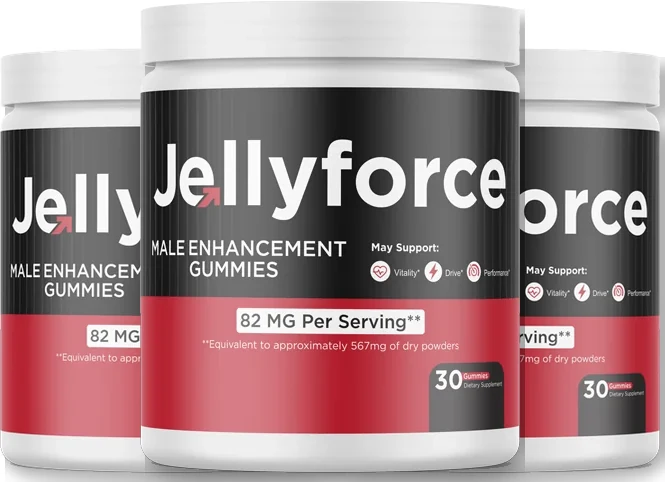
Read the Jelly Force formula before you compare it
Five named botanicals, 82 mg per serving in total, and a 60-day money-back window that starts at purchase. If you are weighing up the best blood sugar supplement claims against a botanical gummy, read the panel first.
Go to the Official Jelly Force Store