Can Supplements Help Weight Loss? What the Fenugreek Appetite Studies Actually Measured
Quick answer: what the fenugreek appetite research measured
The fenugreek studies that get quoted in weight marketing mostly measured how hungry people said they felt, using a pen mark on a ten-centimetre line, over a single day or a few days — not how much weight they lost. A handful went further and weighed what participants ate at a free-access meal afterwards, and a few tracked reported fat intake for a short period. Those are legitimate short-term appetite experiments, and they are a long way from evidence that a capsule changes body weight over months.
- What was measured: subjective hunger and fullness ratings, occasionally food weighed at a test meal — rarely body weight over a meaningful period.
- Likely mechanism: galactomannan, a viscous soluble fibre in the seed, which works physically in the stomach rather than pharmacologically.
- What it is not: an appetite switch, a fat burner, or a treatment for any condition.
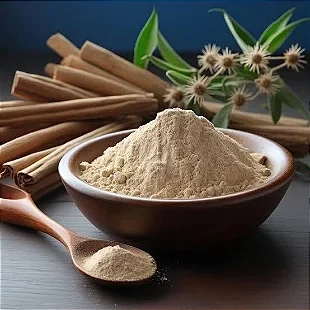
What fenugreek is, and which part reaches a capsule
Fenugreek is Trigonella foenum-graecum, a legume grown across the Mediterranean, the Middle East and South Asia, and used in cooking long before anyone put it in a supplement. The seeds are the part in question. They are unusually rich in a viscous soluble fibre called galactomannan, and they also carry saponins and a distinctive amino acid, 4-hydroxyisoleucine, that has attracted research interest of its own.
That composition explains why fenugreek appears in three completely different product categories — blood sugar formulas, appetite formulas and men's vitality formulas — often with the same ingredient photograph and three incompatible stories about what it does. It also explains why the form on the label matters enormously. A whole seed powder is mostly fibre. A saponin-standardised extract has been processed to concentrate something else entirely and may contain very little fibre at all. Trials on one do not transfer to the other, though marketing copy moves between them freely.
Legume family membership is worth registering at this point as well. Fenugreek sits alongside peanuts, chickpeas and soy, and cross-reactivity in people with those allergies is a documented concern rather than a theoretical one.
What the appetite studies measured, step by step
Appetite research has a standard toolkit, and knowing it turns most supplement claims into something you can evaluate in seconds.
The visual analogue scale. Participants mark a point on a ten-centimetre line anchored at “not at all hungry” and “as hungry as I have ever been”, usually at fixed intervals through a test day. The researcher measures the distance in millimetres. It is quick, validated and entirely subjective.
The ad libitum test meal. After the ratings, participants are offered a meal with free access and the researchers weigh what disappears. This is a behavioural measure and is much harder to fake than a rating, which is exactly why it is the more valuable endpoint of the two.
Short dietary records. Some studies ask participants to record intake for a few days afterwards, which introduces a well-known problem: people under-report food intake systematically, and they under-report it more when they know they are being observed.
Body weight, occasionally. Weight appears far less often than the marketing implies, and where it does, the study duration is usually too short and the sample too small for a weight change to mean much.
So when a product page says fenugreek is “clinically studied for appetite”, that phrase can be entirely true and still refer to a one-day experiment with a few dozen volunteers marking lines on paper.
The fibre mechanism, and why it is the most plausible part
Strip away the marketing and the most defensible explanation for fenugreek's appetite findings is not exotic. Galactomannan is a viscous soluble fibre. In the stomach it absorbs water and forms a gel, which slows gastric emptying, and slower emptying means a longer sense of fullness and a gentler arrival of nutrients into the small intestine. This is plumbing, not pharmacology, and it is the same mechanism behind guar gum, konjac glucomannan and psyllium.
The consequence is a dose problem that most products cannot solve. Viscosity effects need grams of fibre, not milligrams. A gram-scale dose is a heaped teaspoon of powder; it does not fit into a two-capsule serving, and a gummy has even less room. If the physical mechanism is the real one, then the great majority of fenugreek products on the shelf are delivering a homeopathic fraction of what the studies used, regardless of how confidently they cite them.
This is the single most useful test to carry around this category. Ask what the proposed mechanism requires in terms of quantity, then check whether the serving size can physically contain it.
Read the milligrams before the marketing
Jelly Force prints its total per serving on the label rather than hiding it in a blend. If you are hunting for the best supplement to jumpstart weight loss and want to start with a formula that tells you what is in it, read the panel first.
See the Official Jelly Force StoreForms and doses: what the studies used versus what is sold
The gap between research protocols and retail servings is where most of the disappointment in this category is manufactured.
| Preparation | Amount typically used in human studies | What was usually measured | Strength of the human evidence |
|---|---|---|---|
| Whole seed powder | Grams per day, commonly in the region of two to eight | Glucose and lipid markers, sometimes appetite ratings | Moderate for metabolic markers, weak for body weight |
| Isolated galactomannan fibre | Gram-scale, taken with or before a meal | Fullness ratings and intake at a test meal | Mechanistically plausible; small, short studies |
| Saponin-standardised extract | A few hundred milligrams to about a gram daily | Varies widely by sponsor and product | Thin and product-specific; hard to generalise |
| Fenugreek inside a multi-ingredient blend | Rarely disclosed separately | Whatever the formulator chose | Weakest; nothing can be attributed to fenugreek |
| Culinary use in food | Small amounts as a spice | Nothing; it is cooking | Not an intervention, and not a claim |
Two lines in that table do the most damage in practice. The first is the difference between grams and milligrams. The second is the last row of any panel that says “proprietary blend”, which converts every study ever published into decoration.
Why appetite endpoints are the softest data in nutrition
There is a reason careful researchers treat hunger ratings with caution. Appetite is a perception, and perceptions respond to expectation. A participant who knows they have taken a supplement designed to reduce hunger has been handed a strong hint about what they are supposed to feel, and a ten-centimetre line is an easy place to express it.
Blinding is supposed to solve this, and often cannot. Fenugreek has a pronounced smell and a bitter, maple-like taste that survives encapsulation for many people; it can even change the smell of sweat and urine. A blinded trial where a substantial share of participants can identify their allocation from the first dose is not really blinded.
Add the usual structural problems — small samples, single sites, short durations, secondary endpoints promoted to headlines after the fact — and the reasonable position is that fenugreek's short-term appetite findings are interesting and unproven. That is not a dismissal. It is a description of how strong the file is.
An ingredient can have a plausible mechanism, a long culinary history and several positive small studies, and still not be a reason to buy a capsule. The question is never whether the plant does something. It is whether this serving, at this amount, does something you would notice.
Can supplements help weight loss, honestly answered
Here is the answer we would give a friend. Can supplements help weight loss? They can occasionally make an existing plan slightly easier to stick to — a viscous fibre taken before a meal genuinely does blunt hunger for some people, and something that improves adherence has real value. What they cannot do is generate the result themselves. Every trial in which a supplement is associated with weight change is a trial in which something else was also happening: an energy deficit, dietary counselling, a structured plan, closer attention to food.
That framing also explains the pattern you see across the literature. Effects are small, they appear on top of a dietary intervention, and they fade in longer studies as adherence normalises. Anyone searching for the best quick weight loss supplement is looking for an exception to that pattern, and the exception does not appear in the published record.
So when you ask can supplements help weight loss, the useful follow-up is: help with what, specifically? Fullness before a meal is a real target with a real mechanism. Metabolism, fat burning and craving elimination are marketing categories, not measurable endpoints, and products sold on those words tend to be sold on very little else. This matters practically as well as intellectually — deciding where to buy weight loss supplements is a much easier question once you have narrowed what you actually want a product to do.
What fenugreek cannot do
Directly, without softening.
It cannot diagnose, treat, cure or prevent any disease, and no dietary supplement may be marketed as though it can. This is not decorative legal text; it is the line that separates a food supplement from a medicine, and any page promising to reverse a condition has crossed it.
It cannot deliver its likely mechanism from a small capsule. If the effect depends on gel-forming fibre and the serving contains a few hundred milligrams, the mechanism has not been delivered.
It cannot substitute for an energy deficit. Nothing in the fenugreek record suggests weight change without a dietary change alongside it.
It cannot be assumed safe for everyone. Pregnancy is a clear avoid. Legume allergy is a genuine caution. Fenugreek may affect blood glucose, which matters if you take medication that also lowers it, and it has been associated with effects on blood clotting, which matters if you take anticoagulants or have surgery scheduled. The commonly reported nuisance effects — gas, bloating, loose stools and a maple-syrup body odour — are harmless but real.
And it cannot be judged from a label that will not tell you the form or the amount. That is not a limitation of the plant; it is a limitation of the product.
Where this leaves Jelly Force
To be straightforward about it: fenugreek is not in this product. The Jelly Force ingredient panel names muira puama, maca, catuaba, ashwagandha and L-arginine, and states 82 milligrams per serving in total across all five. That total is worth sitting with, because it makes the same point this article has been making about fenugreek: gram-scale mechanisms cannot be delivered by milligram-scale servings, whatever the ingredient.
We publish this piece because the reasoning transfers everywhere. Ask what was measured, in whom, for how long, using which form and at what dose — then check whether the serving in front of you resembles any of it. Our companion articles run the same test on other ingredients you will meet while comparing products: berberine and the human insulin sensitivity trials covers the most studied compound in the category, and the piece on the chromium effect size covers the most widely sold mineral in it. None of those ingredients is in this formula either, and saying so is more useful to you than implying otherwise.
Frequently asked questions
What did the fenugreek appetite studies actually measure?
Mostly self-rated hunger, fullness and desire to eat, marked on a ten-centimetre line called a visual analogue scale, sometimes followed by a free-access meal where researchers weighed what participants ate. A few studies also tracked reported fat intake over several days. Very few measured body weight over a period long enough for weight to be the point.
How much fenugreek did the studies use?
Whole seed powder was typically given in grams a day, often in the region of two to eight grams, while standardised fibre or saponin extracts were used at a few hundred milligrams to about a gram. The gap matters, because a small capsule cannot deliver a gram-scale fibre dose no matter what the front of the bottle says.
Can supplements help weight loss on their own?
Not on their own, on the evidence available. Supplements are studied as an addition to a dietary change, not as a replacement for one, and the average differences reported are small and inconsistent. The honest framing is that a supplement may support a plan you are already following, and it cannot substitute for the plan.
Who should avoid fenugreek?
Anyone pregnant should avoid it, and anyone allergic to legumes such as peanuts or chickpeas should treat it with caution, since fenugreek belongs to the same plant family. It may also affect blood glucose and blood clotting, so anyone on medication for either should speak to a doctor or pharmacist before starting it.
Scientific references
- PubMed — randomised studies of fenugreek, appetite and energy intake (search record)
- PubMed — galactomannan viscosity, gastric emptying and satiety (search record)
- NIH National Center for Complementary and Integrative Health — Fenugreek
- Harvard T.H. Chan School of Public Health — Fiber
- Mayo Clinic — Dietary fiber: essential for a healthy diet
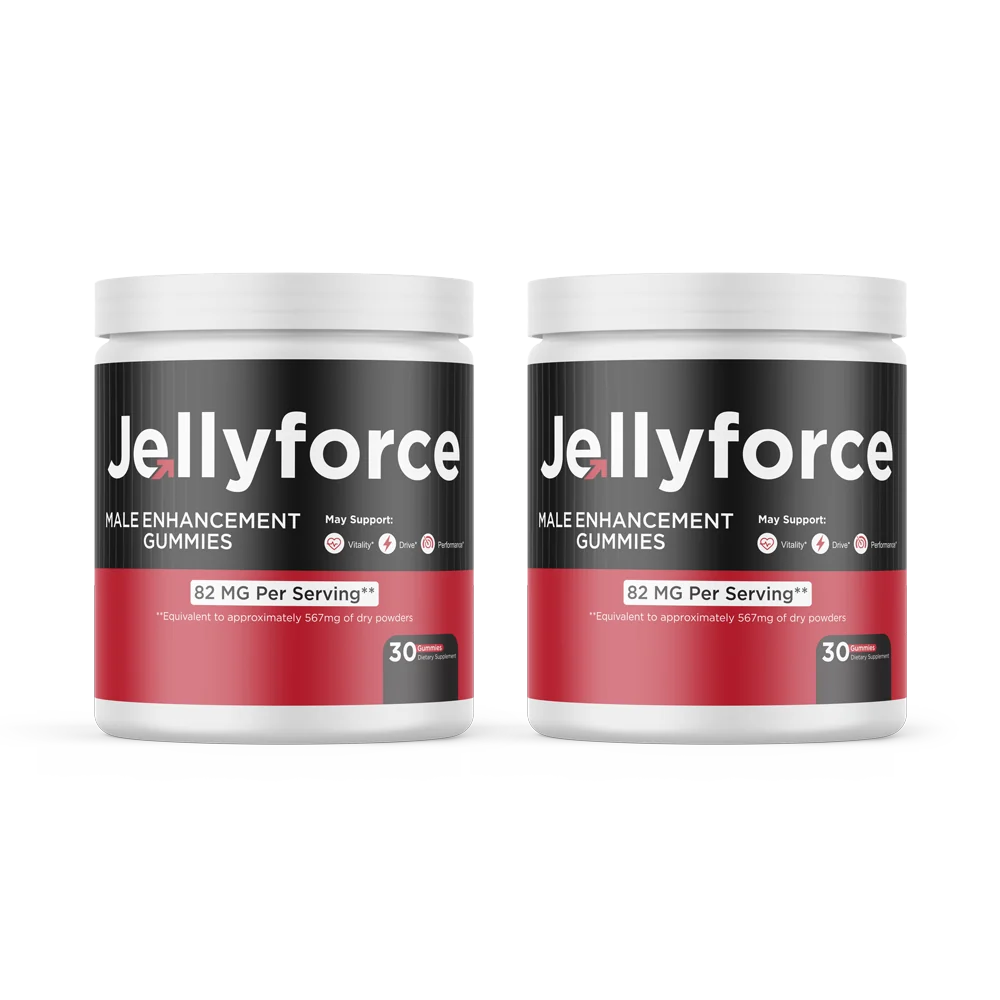
See the Jelly Force label for yourself
Five named botanicals, 82 mg per serving in total, and a 60-day money-back window that starts at purchase. Before you compare it with anything else on the shelf, read what it actually commits to.
Go to the Official Jelly Force Store