How Long Weight Loss Supplements Take to Work: A Week-by-Week Timeline
Quick answer: how long do weight loss supplements take?
How long weight loss supplements take depends on your habits, but the honest timeline is slow. Expect little visible change in the first two to four weeks, roughly one to three pounds by around thirty days with diet and activity, and about five to ten pounds over eight weeks with consistent lifestyle change. Individual variation is large, and any overnight promise is a red flag.
- Weeks 1 to 4: mostly setup and water-weight noise, little true fat change.
- Weeks 4 to 12: the window where steady habits compound and results show most clearly.
- Biggest levers: a calorie deficit, protein, movement, sleep and hydration, not the capsule.
If you are asking how long weight loss supplements take to work, you have already done the most important thing, which is to expect a timeline at all. The category thrives on the opposite instinct, the hope that a capsule or gummy delivers something you can feel by the weekend. The reality is slower, less dramatic and far more useful to understand, because knowing the real schedule is what stops you quitting on week two, right before anything was ever going to show. This is the honest week-by-week version, with no overnight promises and no pretending the supplement does the work your habits do.
Why the first month barely moves
The single most common reason people abandon a supplement is that nothing happened in the first few weeks, and that reaction, while completely understandable, misreads what the first month actually is. Early on, your body is doing several things at once that do not translate cleanly onto the scale. Habits are still forming. Water weight is shifting in both directions depending on sodium, carbohydrate and hydration. And genuine fat loss, the thing you actually care about, is inherently slow, because it comes from a sustained energy deficit rather than a sudden switch.
Botanical supplements add a second reason for the slow start. They are not drugs and do not act like them. Where a medication can produce a fast, measurable pharmacological effect, most botanical ingredients build gradually and support the body's ordinary processes rather than overriding them. That is precisely why an ingredient like ashwagandha or maca is studied over eight to twelve weeks rather than eight to twelve hours. Little movement in the first month is not evidence of failure, it is the normal shape of the process, and mistaking one for the other is the most expensive error in this whole category.
How long weight loss supplements take: the realistic week-by-week timeline
Here is the schedule laid out plainly, for a botanical or over-the-counter weight support product used the honest way, meaning alongside a real change in diet and activity rather than instead of one.
| Window | What is happening under the surface | What the scale reasonably shows |
|---|---|---|
| Week 1 | Routine starting, hydration and sodium shifting | Noise in both directions; not a verdict |
| Weeks 2 to 4 | Habits bedding in, early consistency | Around 1 to 3 lb by the end of month one |
| Weeks 4 to 8 | Steady deficit compounding, ingredients at fuller effect | Roughly 5 to 10 lb total with real lifestyle change |
| Weeks 8 to 12 | Results clearest; body may begin adapting | Continued progress if adherence holds; plateaus normal |
| Beyond 12 weeks | Down to habits, not the supplement | Highly individual; maintenance becomes the skill |
Two things stand out from that table. The first is that the interesting part starts after the point where most people have already quit. The second is that the numbers are modest by design, because a healthy, sustainable rate of loss is modest, and rapid drops are usually water or muscle rather than the fat you set out to lose. If a product's marketing contradicts this schedule, the marketing is wrong, not the schedule. We put a specific formula against exactly this yardstick in our look at the evidence on whether Jelly Force actually works.
Give any supplement a fair run, on honest terms
A single 30-day bottle is the start of the timeline, not the whole of it, which is why supplements sell in bundles and back them with a return window. If you want a botanical option with a clearly stated label and a 60-day money-back guarantee to test over a fair stretch, read the panel first.
See the Official Jelly Force StoreWhat actually speeds things up
The uncomfortable truth is that the fastest levers have nothing to do with the supplement bottle. If you want visible progress sooner, these are the things that move it, in rough order of impact.
A modest calorie deficit. This is the engine. No ingredient substitutes for eating somewhat less energy than you burn, and no supplement outruns a surplus. Modest is the operative word, since aggressive deficits tend to cost muscle and rebound.
Enough protein and enough movement. Protein protects muscle and blunts hunger while you are in a deficit, and regular activity, especially walking plus some resistance work, both burns energy and preserves the tissue that keeps your metabolism up. Together they change how the loss looks and feels.
Sleep and stress. These are the underrated multipliers. Short sleep and chronic stress raise appetite, sap the willpower a deficit demands, and make everything harder. This is, incidentally, the one place a botanical like ashwagandha has a plausible supporting role, by helping with the stress side rather than by burning anything.
Hydration and consistency. Being well hydrated supports appetite control and steadier readings, and taking your supplement at the same time each day removes the guesswork about whether you are actually giving it the fair run the timeline requires.
There is no ingredient that outruns poor sleep, high stress and an unchanged diet. A supplement is a tailwind for a plan that already exists, never the plan itself.

Three myths this timeline kills
"If it does not work in two weeks, it does not work." This is the most costly myth in the category, because two weeks is inside the setup phase for almost every supplement. Judging a product at day fourteen is like grading a crop the week after planting. Give it the eight to twelve weeks the research uses.
"A stronger dose means faster results." Past a sensible amount, more is not faster, it is just more, often with a longer list of side effects and no extra benefit. Chasing speed through megadoses is how people end up with the problems covered in our weight loss supplement side effects guide, not with quicker progress.
"The right product works overnight." No legitimate weight supplement works overnight, and the ones that appear to are usually diuretics shedding water or stimulants blunting appetite for a day, neither of which is fat loss. Sustainable change is slow across every product, which is exactly why comparing options is about honesty rather than speed, the lens we use in ranking the best weight loss gummies of 2026.
Why individual variation is so large
Even with everything done well, two people on the identical supplement and plan can see very different timelines, and it is worth naming why so you do not measure your progress against someone else's highlight reel. Starting weight matters, since people with more to lose often move faster at first. Age, sex, hormones, medication, muscle mass, sleep quality, stress load and baseline diet all shift the curve. So does simple measurement: weighing daily at inconsistent times will bury a real trend under noise, while a weekly average at the same time tells the truth.
The practical takeaway is to compete with your own trend line, not with a stranger's testimonial. Track a weekly average, give the plan a fair quarter, and judge the direction of travel rather than any single morning's number. A supplement fits inside that picture as a supporting player, and the honest way to buy one is to read what it actually contains and how the purchase works before you start the clock. Our guide to where to buy Jelly Force and the refund policy covers those practical terms.
What a supplement timeline cannot promise
Stated plainly. It cannot promise a specific number of pounds by a specific date, because too much depends on the person and the habits. It cannot compress the process, since healthy fat loss is slow whatever the label says. It cannot replace the fundamentals of diet, movement, sleep and hydration that do the real work. And no supplement may be marketed to diagnose, treat, cure or prevent any disease, which is worth remembering whenever a timeline is dressed up as a medical outcome. These statements have not been evaluated by the FDA, and individual results vary.
Frequently asked questions
How long do weight loss supplements take to work?
Longer than most labels imply. Expect little visible change in the first two to four weeks, a modest result of roughly one to three pounds by around thirty days when paired with diet and activity, and about five to ten pounds over eight weeks with consistent lifestyle change. Individual variation is large, and anything advertised as an overnight or first-week transformation is not being honest with you.
Why no results in the first month?
The first month is mostly setup. Your body is adjusting habits, shifting water weight and starting slow physiological changes that do not show cleanly on the scale yet. Botanical ingredients also build gradually rather than acting like a drug, and real fat loss is slow by nature. Little movement early is normal and is not proof the supplement or your plan has failed.
When do supplement results peak?
Most people see the clearest results between about weeks four and twelve of consistent use combined with diet and exercise, as steady habits compound. After that, progress depends far more on adherence than on the supplement, and plateaus are normal. A supplement supports the trend rather than driving it, so the peak really reflects how consistent the surrounding routine has been.
What helps supplements work faster?
The fundamentals do the heavy lifting. A modest calorie deficit, adequate protein, regular movement, good sleep and proper hydration all speed visible progress far more than any capsule. Taking the supplement consistently at the same time each day, and giving it a fair eight to twelve week run, also matters. There is no ingredient that outruns poor sleep, high stress and an unchanged diet.
Scientific references
- CDC — Losing Weight: what a healthy, sustainable rate looks like
- NIH Office of Dietary Supplements — Dietary Supplements for Weight Loss
- NIH National Center for Complementary and Integrative Health — Dietary and Herbal Supplements
- NIH NIDDK — Weight Management
- Federal Trade Commission — Dietary Supplements: An Advertising Guide for Industry
Related reading
- Does Jelly Force actually work? The evidence, ingredient by ingredient
- Weight loss supplement side effects: a practical safety guide
- The best weight loss gummies of 2026, honestly ranked
- Chromium picolinate for cravings and blood sugar: what the evidence shows

Start the clock with a label you can read
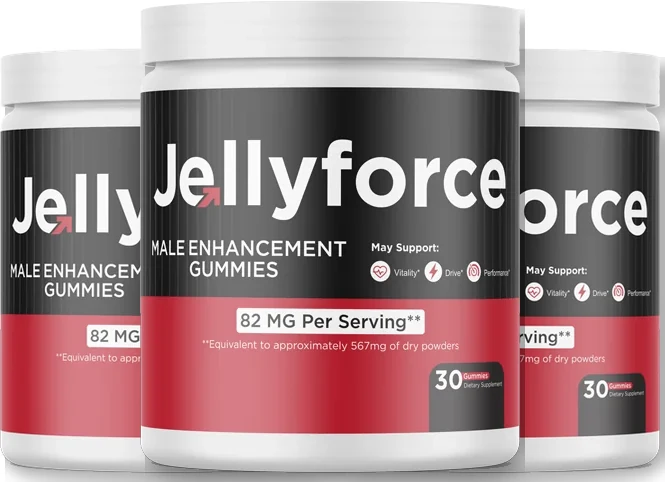
Five named botanicals, 82 mg per serving, a 30-day supply per bottle, and a 60-day money-back window that gives the timeline room to run. If you are ready to test a supplement the honest way, read the panel first, then commit to the weeks it takes.
Go to the Official Jelly Force Store