Gut Health Herbal Supplements: What Slippery Elm and Marshmallow Root Mucilage Actually Does
Quick answer: what mucilage does in gut health herbal supplements
Slippery elm and marshmallow root are demulcents, which means their inner bark and root are packed with mucilage — large plant sugar molecules that swell in water and turn it thick, slippery and gel-like. In gut health herbal supplements that gel works physically rather than pharmacologically: it coats the surfaces it touches and adds viscosity to whatever is moving through, which is why traditional use always involved grams of powder in a full glass of water rather than a small dry capsule. The human trial file is thin and most of it tests these herbs inside multi-ingredient formulas, so the honest summary is a plausible physical mechanism with a largely traditional record behind it.
- What mucilage is: gel-forming plant polysaccharides that are not absorbed — they act on contact, then ferment or pass through.
- What it needs: water, and enough material. Viscosity is a gram-scale property, so milligram servings cannot deliver it.
- What it is not: a treatment for any digestive condition, a gut “repair” agent, or a fat burner.
What mucilage actually is, in plain language
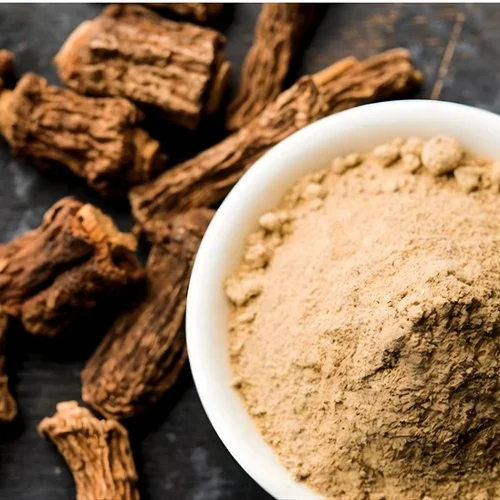
Mucilage is not a mysterious herbal principle. It is a family of very large, branched sugar molecules — polysaccharides, chemically related to the pectins and gums used in food manufacturing — that hold onto water with unusual enthusiasm. Drop enough of them into a glass and the water stops behaving like water. It thickens, becomes faintly slimy, and coats whatever it runs over. Anyone who has left chia seeds in a jar overnight, or noticed how okra changes the texture of a stew, has watched mucilage work.
The word that herbalists use for this class of plant is demulcent, meaning something that soothes by coating rather than by acting on a receptor. That distinction is the single most useful idea in this article. A demulcent is not absorbed into the bloodstream in any meaningful amount and does not need to be. Its proposed action happens on contact, on the surface of the tissue it touches, and then it either gets fermented by bacteria further down or leaves the body largely as it arrived.
Three consequences follow, and they explain almost everything about how these ingredients should be judged. First, quantity matters more than potency, because viscosity is a bulk property. Second, water matters, because a mucilage that never hydrates never forms a gel. Third, the contact has to happen where you want it — a lozenge dissolving in the mouth and a powder reaching the small intestine are doing two different things, even when the label ingredient is identical.
There is a second, more speculative angle worth naming honestly. Mucilage is fermentable, which means gut bacteria can use it as a food source, and that puts it loosely in the same conversation as prebiotic fibre. It is a reasonable hypothesis. It is not, for these two herbs specifically, a well-evidenced one, and any label that leans on the microbiome to sell slippery elm is running ahead of the published work.
Slippery elm: the inner bark, and what has actually been tested
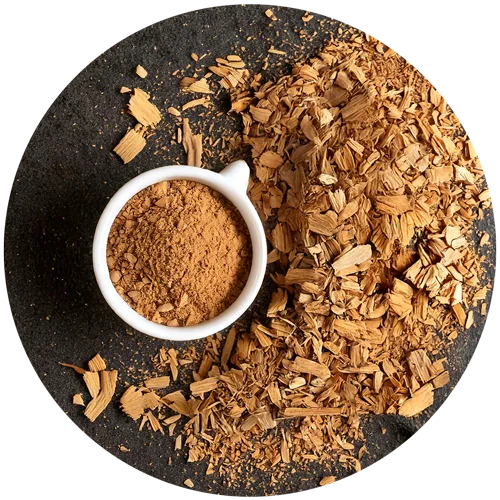
Slippery elm is Ulmus rubra, a North American tree whose inner bark — the soft layer between the outer bark and the wood — is dried and milled into a pale, faintly sweet powder. It has one of the longest continuous records of use of any plant in North American herbal practice, first among Indigenous nations and then in nineteenth-century medicine, where it was a household staple for sore throats and as a gruel for people who could not keep other food down.
That history is genuinely long, and it is also the strongest part of the file. When you move from tradition to trials, the picture thins quickly. There are relatively few controlled human studies of slippery elm on its own, and several of the better-known ones tested it as one component of a multi-herb formula. That design creates an attribution problem that no amount of confident marketing can solve: if a blend of five botanicals produces a change in symptom scores, nothing in the result tells you which botanical did it, or whether any single one of them would have done anything alone.
What remains plausible is the physical account. A viscous gel moving through the digestive tract can change the texture and transit of what is around it, and it can form a temporary layer over irritated surfaces. That is a modest, mechanical claim, and it is the one worth making. It is also the reason slippery elm still appears in throat lozenges, where the contact is direct, immediate and easy to feel.
One practical note that rarely reaches product pages: bark is harvested by stripping it, which is harder on a tree than picking a leaf or a fruit. Sustainably sourced slippery elm exists, but the pressure on wild stands is real, and a supplier who cannot say where the bark came from is telling you something about the rest of their supply chain too.
Marshmallow root: the older file, and why cold water matters
Marshmallow is Althaea officinalis, a mallow-family plant of damp ground whose use in Europe and the Middle East goes back to antiquity. The confection borrowed the name because it was originally made from the root's mucilage, whipped with sugar and egg white; nothing in a modern bag of marshmallows has any connection to the plant at all.
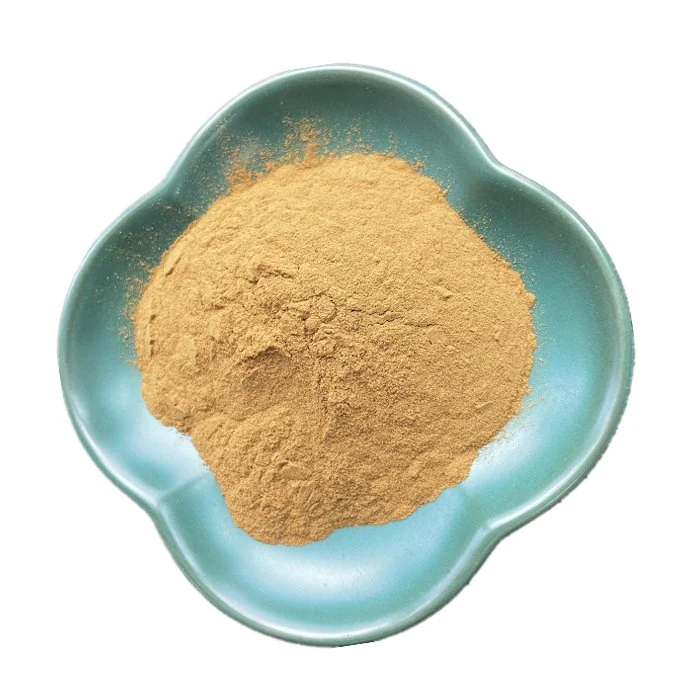
The mucilage is concentrated in the root, and the traditional preparation contains a detail that most capsule products quietly discard. Marshmallow root was steeped in cold water, often for hours, because heat degrades the polysaccharides that give the preparation its character. A cold macerate of a few grams of chopped root produces a noticeably thick, slightly sweet liquid. Boil the same root and you get tea with much of the point cooked out of it.
European regulators list marshmallow root in the traditional-use category for herbal preparations. That classification is worth understanding rather than quoting as though it were an endorsement: it rests on a plausible safety record over a long period of use, not on a body of clinical trial evidence. It means a preparation may be sold with a traditional-use wording. It does not mean anyone has demonstrated an effect in a modern randomised trial.
Most of the mechanistic work behind marshmallow root is laboratory work — studies of how the polysaccharides adhere to mucosal cells in culture, and of the physical properties of the extract. That is real science and it supports the demulcent story. It is not the same thing as evidence that a capsule changes how a person feels, and the gap between those two statements is where most of this category's marketing lives.
Judge the panel, not the plant
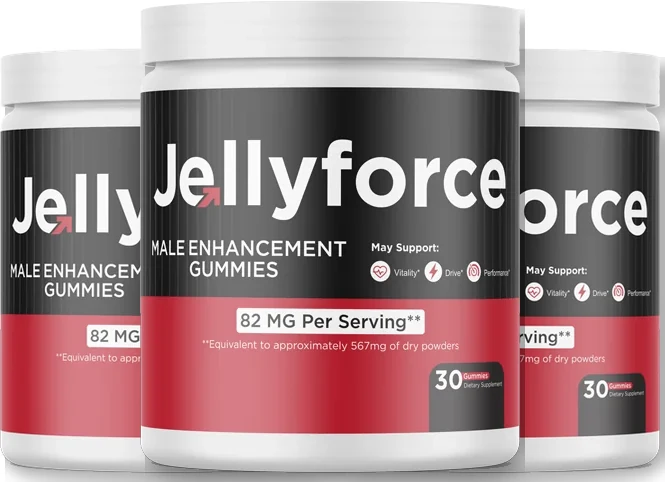
Whatever herb is on the front of a bottle, the number that decides whether it can work is on the back. Jelly Force prints its total per serving on the label instead of burying it in a proprietary blend — if you are comparing gummy formulas and want to start with one that tells you the amount, read the panel first.
See the Official Jelly Force StoreDoses and forms: what tradition uses versus what a capsule holds
The gap between how mucilage herbs were traditionally taken and how they are usually sold is the most important practical thing on this page. If you are hunting for the best gut health supplement in this category, the first filter is not the brand name or the certification badge — it is whether the format can physically deliver the mechanism being advertised.
| Preparation | Amount typically used | How the mucilage is delivered | Strength of the human evidence |
|---|---|---|---|
| Slippery elm powder stirred into water | Roughly a teaspoon or more, so grams rather than milligrams | Hydrated before swallowing; gel forms in the glass | Long traditional use; few controlled trials of the bark alone |
| Marshmallow root cold macerate | A few grams of chopped root steeped in cold water for hours | Fully extracted into the liquid before drinking | Traditional-use classification; mostly laboratory mechanism work |
| Demulcent lozenge | Small amount, dissolved slowly in the mouth | Direct contact with the throat and mouth as it dissolves | The most direct format for a coating effect you can feel |
| Capsules of dried powder | Commonly a few hundred milligrams per capsule | Shell must dissolve first, and little water arrives with it | Weak — the format works against the proposed mechanism |
| Concentrated “10:1” style extract | Small milligram serving | Depends entirely on what the process kept | Weakest for a mucilage herb; concentration can strip the fibre |
| One named herb inside a multi-herb blend | Rarely disclosed separately | Whatever the formulator decided | Nothing can be attributed to either herb specifically |
Two rows in that table do most of the damage in the real world. The concentrated extract row is counter-intuitive and worth sitting with: for most botanicals, concentrating the extract is a way of increasing the active compounds, but for a mucilage herb the bulk polysaccharide is the point, and an aggressive extraction can remove exactly what you were paying for. The blend row is the older problem — once an amount disappears into a proprietary blend, every study ever published on that ingredient becomes decoration on the label rather than support for the serving.
Why gut health herbal supplements are unusually hard to test
Digestive research has a structural problem that does not apply nearly as strongly to, say, blood pressure or cholesterol. The outcomes people care about are feelings. Comfort, bloating, urgency, the sense of things moving normally — these are reported, not measured, and reported outcomes respond powerfully to expectation. Placebo response rates in functional digestive complaints are among the highest documented anywhere in medicine, which means a trial has to clear a high bar before a positive result means much.
Blinding is the second problem, and mucilage makes it worse than usual. A drink that has visibly thickened is not easy to disguise. A participant who stirs a powder into water and watches it turn slippery has been given a strong clue about which arm of the study they are in, and once the blind is broken the expectation effect has a clear run at the outcome sheet.
Then come the ordinary limitations that stack on top: small samples, single sites, short durations, self-selected volunteers who already believe in herbal approaches, and multi-ingredient formulas that make attribution impossible. None of this means the herbs do nothing. It means the evidence is not strong enough to carry the confident claims that gut health herbal supplements are routinely sold with, and saying so is more useful than pretending otherwise.
The same reasoning is worth carrying into adjacent categories. When you are comparing the best weight loss herbal supplement options and one of them leans on a viscous fibre to blunt appetite, ask the same two questions: how much fibre is actually in a serving, and was the trial you are being shown run on that amount in that form? Our piece on what the fenugreek appetite studies actually measured works through exactly that arithmetic for a different gel-forming fibre, and the conclusions transfer.
A demulcent works by contact. That means the dose question is not pharmacological but physical: is there enough material, hydrated enough, to coat anything at all? A serving too small to thicken a glass of water is too small to do the only thing the ingredient is claimed to do.
What slippery elm and marshmallow root cannot do
Plainly, and without softening.
They cannot diagnose, treat, cure or prevent any disease, and no dietary supplement may be sold as though it can. This is not decorative legal wording. It is the line between a food supplement and a medicine, and any page suggesting a herb heals, repairs or reverses a digestive condition has crossed it.
They cannot deliver a physical mechanism from a serving too small to be physical. If the proposed action is a gel coating a surface, and the serving is a few hundred milligrams of dry powder in a shell, the mechanism has not been delivered no matter how good the sourcing is.
They cannot substitute for finding out what is wrong. Persistent digestive symptoms deserve a diagnosis rather than a supplement, and some symptoms need one urgently — blood in the stool, difficulty swallowing, persistent vomiting, unexplained weight loss, or pain that wakes you at night are all reasons to see a doctor rather than a herbalist.
They cannot be assumed safe for everyone. Safety in pregnancy and breastfeeding has not been established for either herb. The clearest practical caution is not toxicity but timing: a viscous gel sitting in the stomach can slow or reduce the absorption of medicines swallowed alongside it, so the sensible habit is to leave a couple of hours between a mucilage herb and any prescription. Anyone managing blood glucose should also be aware that viscous fibres can slow the rise after a meal, which is usually harmless but is worth knowing about if you are medicated for it.
And they cannot be judged at all from a label that will not name the form or the amount. That is not a limitation of the plants. It is a limitation of the product.
Where this leaves Jelly Force
Directly: neither slippery elm nor marshmallow root is in this product. The Jelly Force ingredient panel names muira puama, maca, catuaba, ashwagandha and L-arginine, and states 82 mg per serving in total across all five, described on the label as equivalent to roughly 567 mg of dry powders. We publish an article about two herbs that are not in the formula because the reasoning is the transferable part, and because the same arithmetic applies to the panel we do sell.
That arithmetic is simple enough to do standing in a shop. Work out what the proposed mechanism requires in terms of quantity. Check whether the serving in front of you can physically contain it. If the answer is no, the ingredient list is a story about plants rather than a description of a dose — and that is true of a great many gut health herbal supplements, ours and everyone else's included. Where a botanical is present at a token amount, the honest word is “present”, not “clinically dosed”.
The other half of the decision is logistics rather than chemistry. Most formulas in this category are sold direct rather than through pharmacies, which changes what the refund window means and how long delivery takes; if you are working out where to buy weight loss supplements or vitality formulas without getting caught out by the return terms, our guide to ordering supplements internationally covers the shipping and returns side that ingredient pages never mention.
Frequently asked questions
What do slippery elm and marshmallow root actually do?
Both are demulcents, which means they contain mucilage: large plant sugars that swell in water and turn it thick and slippery. The gel coats surfaces it touches and adds viscosity to the contents of the digestive tract, so the effect is physical rather than pharmacological. Nothing about that mechanism treats a disease, and neither herb is absorbed into the bloodstream in any meaningful amount.
How much slippery elm or marshmallow root did traditional use involve?
Grams, not milligrams. Slippery elm was traditionally stirred into water by the teaspoon, and marshmallow root was steeped in cold water at a few grams per cup because heat degrades the mucilage. That is the reference point to hold against any product, because viscosity is a bulk property that a few hundred milligrams of powder cannot produce.
Do gut health herbal supplements work in capsule form?
For mucilage herbs specifically, a small capsule is a poor delivery format. The gel only forms when the powder meets enough water, and a capsule delivers a fraction of a traditional dose in a shell that has to dissolve first. Powders stirred into a full glass of water, or lozenges that hydrate in the mouth, match the proposed mechanism far more closely than capsules do.
Are slippery elm and marshmallow root safe to take with medication?
The main concern is not toxicity but timing. A viscous gel in the stomach can slow or reduce the absorption of medicines swallowed at the same time, so the standard precaution is to separate a mucilage herb from any medication by a couple of hours. Safety in pregnancy and breastfeeding has not been established, and anyone with an ongoing condition should ask a doctor or pharmacist first.
Scientific references
- PubMed — clinical literature on slippery elm and Ulmus rubra (search record)
- PubMed — Althaea officinalis mucilage and demulcent activity (search record)
- NIH National Center for Complementary and Integrative Health — Herbs at a Glance
- Harvard T.H. Chan School of Public Health — The Microbiome
- Mayo Clinic — Dietary fiber: essential for a healthy diet
See the Jelly Force label for yourself
Five named botanicals, a printed total per serving instead of a hidden blend, and a 60-day money-back window that starts at purchase. Before you compare it with anything else on the shelf, read what it actually commits to.
Go to the Official Jelly Force Store