Jelly Force Official Website › Articles › The format
The formatJelly Force Gummies: Gummy or Capsule, What the Format Really Costs
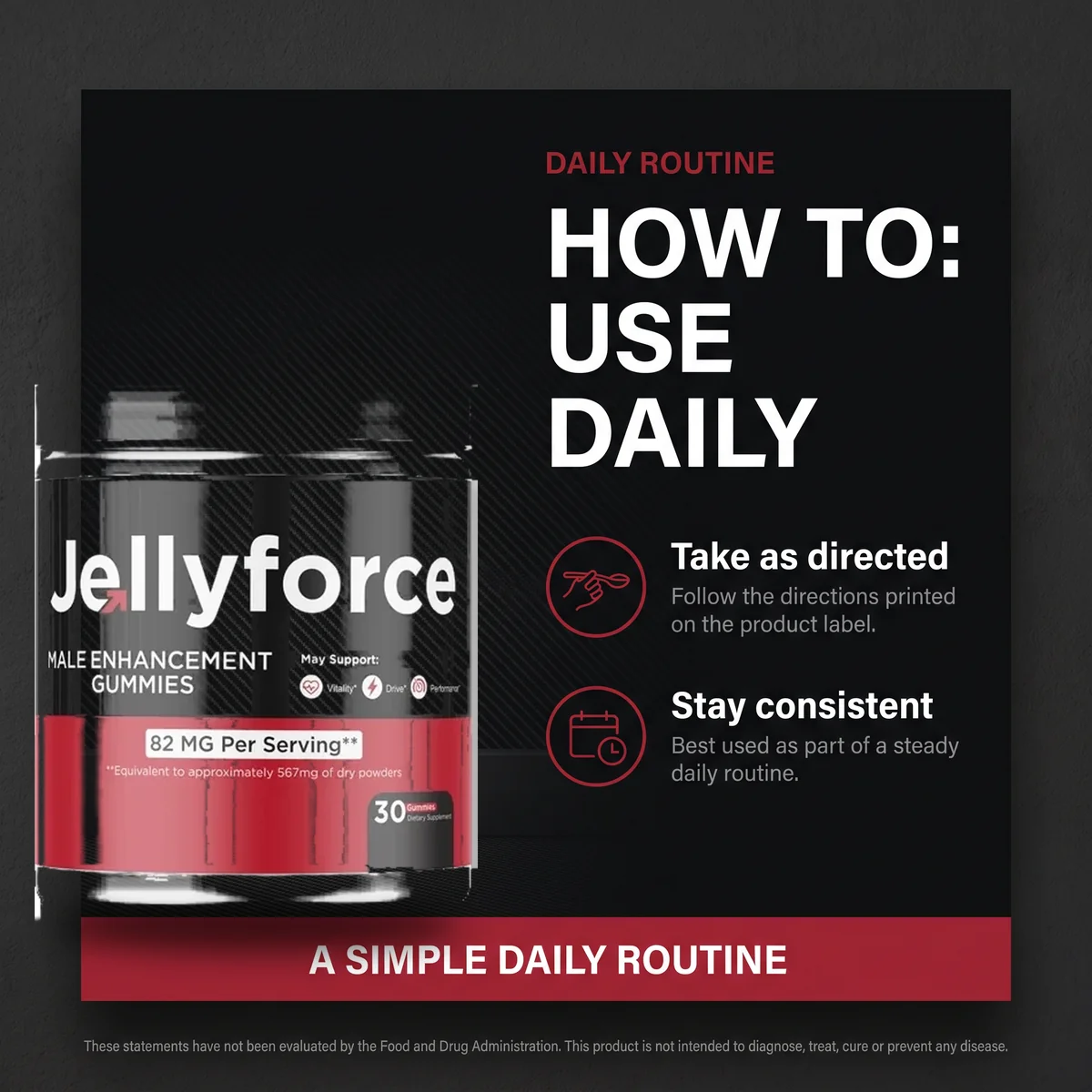
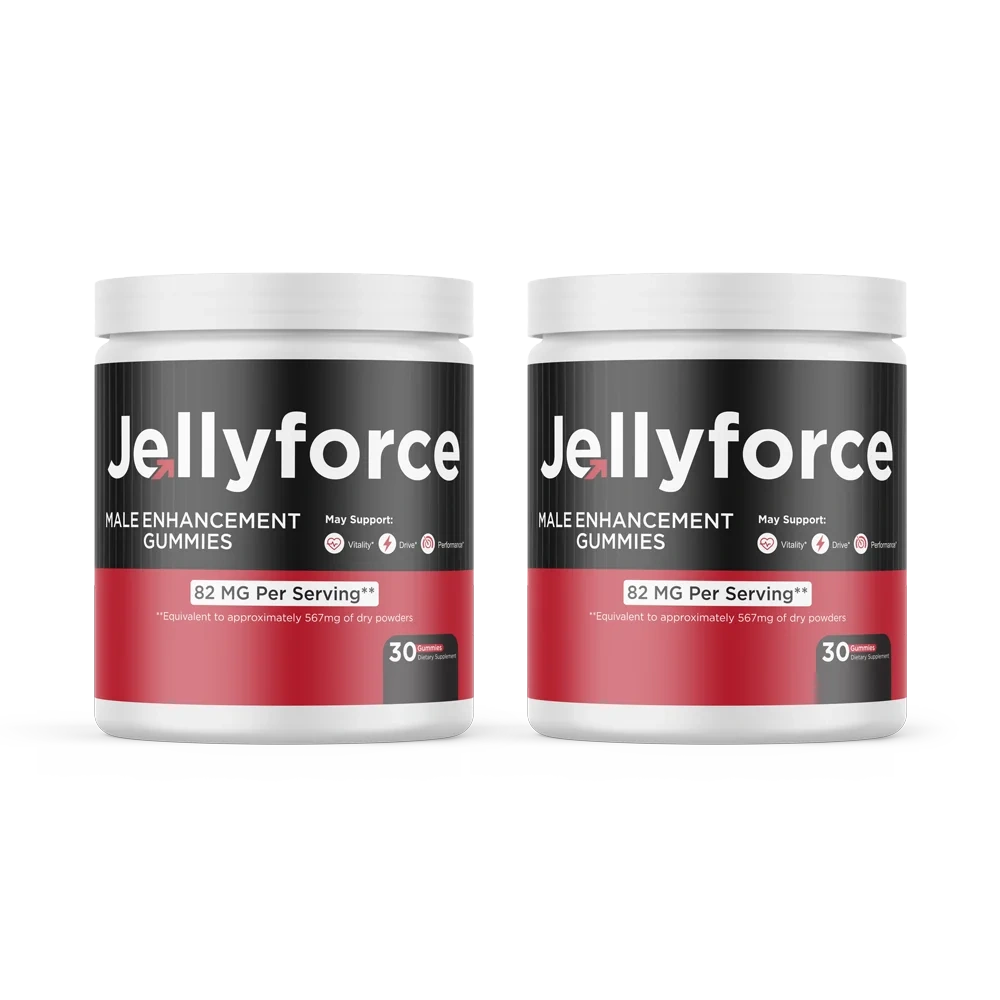
Jelly Force gummies are chewable dietary supplement gummies, 30 to a bottle, taken one a day. Each gummy carries an 82 mg blend of nine ingredients, with 5 mg of caffeine the only amount printed on its own. A gummy carries tens of milligrams and is easy to keep taking for two months. A powder carries grams, which is what the maca and arginine trials used.
The trade nobody puts on the packaging
Every supplement format is a compromise between how much active material it can carry and how likely somebody is to take it every day. Gummies sit at one end of that line and powders at the other, and the choice matters more than most ingredient arguments do.
This bottle is a gummy: 30 to a bottle, one a day, 82 mg of active material a serving. That number is a property of the format at least as much as of the formulation.
Jelly Force is a dietary supplement and not a treatment. Nothing here is medical advice. Difficulty that is new, persistent or getting worse is a recognised early signal of vascular trouble and deserves an assessment rather than a purchase — a 2026 review in Nature Reviews Urology sets out why, and the NIDDK patient guide sets out what an assessment involves.
What a gummy costs you
A gummy is mostly its delivery system. Gelling agent, sweetener, water, colour, acidity regulator, an anti-stick coating: all of that has to be in there before a single milligram of anything active goes in, and the whole thing has to end up small enough and pleasant enough to chew. This bottle's Supplement Facts panel lists its own: corn syrup, cane sugar, water, apple pectin, sorbitol liquid, natural flavors, citric acid and sodium citrate dihydrate, which between them bring 10 calories and 3 g of added sugar.
The result is a hard ceiling measured in tens of milligrams. That is why botanical gummies across every category carry less than the capsules beside them on the same shelf, and it applies to every brand equally.
| Format | Roughly what it can carry | What the literature usually uses |
|---|---|---|
| Chewable gummy | Tens of milligrams of active material | Almost no trials use this format for botanicals |
| Capsule | Hundreds of milligrams | the ashwagandha trials sit here |
| Tablet | Hundreds of milligrams, sometimes more | Common for single amino acids |
| Powder in water | Grams | the maca trials and every arginine trial sit here |
The right-hand column is the reason a gummy will almost never match a trial amount. It is a structural fact about the format rather than a criticism of any particular product.
What a gummy buys you
Adherence, and it is not a small thing.
The eight reviews this distributor publishes are the closest thing to evidence about this bottle, and the single most common statement across them is not about an effect at all. Five of the eight say the daily habit stuck and that they reordered before the last bottle ran out. Nobody in the published set describes forgetting it.
Set that against the quiet arithmetic of every other format. A three-capsule, twice-daily regimen taken properly beats a gummy comfortably. The same regimen taken four days a week, then three, then abandoned in week three, does not beat anything.
- No water needed. A gummy is portable in a way a capsule with a meal requirement is not.
- No food rule printed on this label, which removes the most common reason a dose gets skipped.
- One action a day, taking about five seconds, is the lowest-friction routine available in this category.
- It is pleasant, which sounds trivial and is the actual mechanism behind everything above.
- And the failure mode is forgetting, not difficulty — which means placement solves it. Put the bottle where the thing you already do every morning happens.
Order Jelly Force if the format is the point
One chewable a day, 30 to a bottle, and 60 days from purchase to find out whether a routine you will actually keep is worth more to you than a larger dose you will not.
Two bottles $158 · six bottles $294 · 60-day money-back guarantee
Order Jelly Force From This CounterLot JEL-26/JE-6975 · one a day, 30 to a bottle · ships from the United States
Which format suits which reader
| If this is you | The format that fits | Why |
|---|---|---|
| You have abandoned two or three capsule routines already | A gummy | The binding constraint is you, not the milligrams |
| You want the amounts the trials used | Single-ingredient capsules or powder | A gummy cannot get there, and neither can any gummy |
| You travel most weeks | A gummy | No water, no meal timing, no pill organiser |
| You are already taking four other supplements | Whatever you already keep to | Adding a fifth format is how the fourth gets dropped |
| You want one ingredient at a serious amount | Buy that ingredient on its own | Nine names in one 82 mg blend is nine small amounts |
Three of these rows send a reader somewhere other than this bottle, which is the honest distribution.
What is actually inside a gummy
A rough anatomy, because the ceiling this article keeps referring to is easier to believe once the list is visible.
Everything on the list below has to be present before a single milligram of anything active goes in, and the finished object has to stay small enough that a person will chew it without resentment.
- A gelling agent — apple pectin on this bottle, gelatin on many others — which is the structure and is a large fraction of the weight.
- Sweetener and water, which are most of what is left.
- An acidity regulator, which stops the gel setting wrong and does much of the flavour work.
- Colour and flavour, in small amounts, doing the job that makes the format worth choosing.
- A coating, so the pieces do not fuse into one block in the bottle.
- Then the actives, in whatever room is left.
Which is how a bottle ends up printing 82 mg a serving rather than a gram. It is not a formulation choice that could have been made differently within the same format; it is the format.
The same arithmetic explains two smaller things on this label. It explains why the dry-powder equivalent of about 567 mg is given as an extract rather than as plant material: seven times the weight simply would not fit. And it explains why nine ingredients rather than one — a formula with nine names reads as more generous than a formula with one, and at this scale the difference between them is milligrams either way. On this panel, the four names listed after caffeine are 5 mg or less each.
The one thing a gummy cannot fix
Adherence solves a real problem, and it does not solve the problem underneath it.
If what is wrong is vascular, a daily chewable is not the intervention. The 2026 review of erectile dysfunction and cardiovascular health describes the condition as a sentinel marker for cardiovascular disease and sets out the mechanisms — low-grade inflammation, endothelial dysfunction, atherosclerosis — which are the same mechanisms a blood-pressure reading and a weight are proxies for.
If what is wanted is the amounts the published trials used, a gummy cannot reach them and no gummy can. The 2023 analysis of marketed products put 80% of what it examined into a no-expected-efficacy cluster largely on this basis, and format is a substantial part of why.
And if the underlying issue is a prescription that has not been reviewed, or sleep that has been short for three years, or alcohol, then the best-evidenced moves available are all free and none of them is a purchase. A page selling something should say that once, plainly, and this is the paragraph.
The honest position on this bottle
Jelly Force is a small daily dose of nine real ingredients in the easiest format to keep to. It is not a clinical dose of any of them and the arithmetic says so plainly.
Whether that is worth buying depends entirely on which reader you are. Somebody who will chew one thing a day for two months and would not have taken anything otherwise is getting something. Somebody who would happily swallow three capsules and wants the amounts the trials used is buying the wrong format, and a page that will not say so is not worth much.
The 60-day window is the mechanism for finding out which one you are, and two bottles is exactly sixty days, so the whole purchase sits inside it.
There is a version of this article that would have ended three paragraphs ago, with the adherence argument and nothing after it. The reason it does not is that adherence is the genuine advantage of this format and it is also the easiest thing in the world to oversell. A routine kept for sixty days is worth more than a stronger one abandoned in week two, and it is not worth more than a stronger one that is also kept.
So the fair claim for a chewable is narrow and it is real: for the reader who would otherwise have taken nothing, this is the format that gets taken. Everybody else should read the dosage comparison first and buy accordingly.
A gummy trades concentration for adherence. The trade is structural and applies to every brand: tens of milligrams instead of grams, in exchange for a routine that actually gets kept. Five of the eight published reviews of this bottle describe the habit sticking, which is the trade working as intended, and the dosage comparison is what it costs.
- Gonzales GF, Córdova A, Vega K, et al. Effect of Lepidium meyenii (MACA) on sexual desire and its absent relationship with serum testosterone levels in adult healthy men. Andrologia. 2002;34(6):367-72. PMID 12472620. https://pubmed.ncbi.nlm.nih.gov/12472620/
- Lopresti AL, Drummond PD, Smith SJ. A Randomized, Double-Blind, Placebo-Controlled, Crossover Study Examining the Hormonal and Vitality Effects of Ashwagandha (Withania somnifera) in Aging, Overweight Males. Am J Mens Health. 2019;13(2):1557988319835985. PMID 30854916. https://pubmed.ncbi.nlm.nih.gov/30854916/
- Shiraseb F, Asbaghi O, Bagheri R, Wong A, Figueroa A, Mirzaei K. Effect of l-Arginine Supplementation on Blood Pressure in Adults: A Systematic Review and Dose-Response Meta-analysis of Randomized Clinical Trials. Adv Nutr. 2022;13(4):1226-1242. PMID 34967840. https://pubmed.ncbi.nlm.nih.gov/34967840/
- Petre GC, Francini-Pesenti F, Vitagliano A, Grande G, Ferlin A, Garolla A. Dietary Supplements for Erectile Dysfunction: Analysis of Marketed Products, Systematic Review, Meta-Analysis and Rational Use. Nutrients. 2023;15(17):3677. PMID 37686709. https://pubmed.ncbi.nlm.nih.gov/37686709/
- Durukan E, Jensen CFS, Grundtvig Skaarup K, Fode M. Erectile dysfunction and cardiovascular health. Nat Rev Urol. 2026. PMID 42649386. https://pubmed.ncbi.nlm.nih.gov/42649386/
- Erectile Dysfunction (ED). National Institute of Diabetes and Digestive and Kidney Diseases, National Institutes of Health. https://www.niddk.nih.gov/health-information/urologic-diseases/erectile-dysfunction