Jelly Force Official Website › Ingredients
IngredientsJelly Force Ingredients: the nine names on the Supplement Facts panel
The Jelly Force label lists nine ingredients in one 82 mg proprietary blend: muira puama, maca, catuaba, green tea extract, caffeine, ashwagandha, L-arginine, tribulus and horny goat weed.
The seller’s advertising names five of them. The blend is equivalent to roughly 567 mg of dry powders, and caffeine, at 5 mg, is the only ingredient with its own printed amount.
What each one is, where it comes from, what the published human work used, and how far that sits from a gummy’s share of an 82 mg blend.
What the Jelly Force panel and the advertising each name
Two accounts of what is in a bottle usually exist: the typed list on the sales page and the printed panel on the container. They are written for different jobs. Advertising picks the names it thinks will sell, while the panel is the regulated declaration and has to name everything in the blend, so when the two disagree it is the panel that carries the fuller list.
Jelly Force is one of those cases. The seller’s list and the graphic headed INSIDE JELLYFORCE name five — muira puama extract, maca extract, catuaba extract, ashwagandha and L-arginine — and the graphic’s footer strip says five named ingredients. The Supplement Facts panel on the bottle lists nine, adding green tea extract, caffeine, tribulus terrestris and horny goat weed extract.
The panel is the regulated statement on the container you receive, so this page follows it. The four additions are not filler: one is a stimulant, one has the most interaction interest on the label, and one is the only herb here with a pooled set of randomised trials in men with erectile dysfunction.
| Ingredient, in panel order | In the seller’s advertising | On the panel |
|---|---|---|
| Muira Puama Extract | Yes | Yes, inside the blend |
| Maca Extract | Yes | Yes, inside the blend |
| Catuaba Extract | Yes | Yes, inside the blend |
| Green Tea Extract | Left out | Yes, inside the blend |
| Caffeine | Left out | Yes, 5 mg |
| Ashwagandha | Yes | Yes, inside the blend |
| L-Arginine | Yes | Yes, inside the blend |
| Tribulus Terrestris | Left out | Yes, inside the blend |
| Horny Goat Weed Extract | Left out | Yes, inside the blend |
The panel reads: Proprietary Blend 82 mg, Muira Puama Extract, Maca Extract, Catuaba Extract, Green Tea Extract, Caffeine (5 mg), Ashwagandha, L-Arginine, Tribulus Terrestris, Horny Goat Weed Extract, with a footnote to the blend: equivalent to approximately 567mg of dry powders.
- 82 mg, the proprietary blend, all nine together.
- 567 mg, the dry-powder equivalent of that blend.
- 5 mg of caffeine, the one amount given alone.
- 30 gummies a bottle, one a day by the label’s suggested use.
Every Jelly Force ingredient, and what its published trials used
Muira Puama Extract
Ptychopetalum olacoidesNo human trial of the plant aloneOn the panel: first inside the blend, so the largest single share of the 82 mg.
Bark from a small tree in the Brazilian Amazon, used locally as a tonic long before anybody analysed it. A 2018 analysis isolated fourteen compounds from the bark and found the picture is dominated by two alkaloids, magnoflorine and menisperine, which together accounted for about 76% of everything measurable. The phenolic fraction came to no more than 1.04 mg a gram.
That matters for a reader trying to judge an extract: the plant's chemistry is known, and what a given extract actually delivers depends entirely on how it was made, which this label does not state.
For human evidence, there is a gap. A 2020 review of fifteen herbal sexual enhancers covers Ptychopetalum olacoides among them, and its subject is psychiatric and neurological adverse effects rather than efficacy. It concludes that most of the plants reviewed appear safe at therapeutic amounts and that drug interactions are the more serious concern, particularly with unstandardised preparations.
Maca Extract
Lepidium meyenii1,500 mg or 3,000 mg a day, 12 weeksOn the panel: second inside the blend, ahead of caffeine, so 5 mg or more.
A root vegetable grown above 4,000 metres in the Peruvian Andes, where it is food rather than a supplement. This is the strongest human evidence on the bottle for desire, and it is worth reading precisely.
A 12-week randomised, double-blind, placebo-controlled trial gave men aged 21 to 56 either 1,500 mg or 3,000 mg of gelatinised maca a day, or placebo. Self-rated sexual desire improved from week eight in the maca groups. The same trial measured serum testosterone and oestradiol and found no difference from placebo, and its authors put that in the title of the paper: the effect they saw had an absent relationship with testosterone.
That single finding is one of the most useful things on this page, because the whole category is sold on a testosterone story. A second trial, a dose-finding study in adults with medication-related sexual difficulty, compared 1.5 g against 3.0 g a day; only the 3.0 g arm separated from baseline on either questionnaire.
Outside this field, a 2024 systematic review and meta-analysis of maca and physical performance in animals and humans reported large effect sizes on fatigue and grip measures, with a dose-response relationship: more macamides, more effect.
Catuaba Extract
Trichilia catiguaCells and animals; no human dose setOn the panel: third inside the blend, ahead of caffeine, so 5 mg or more.
Another Brazilian bark, and one of the fourteen native species that a 2024 review of 74 plants used in Brazilian folk medicine for male sexual dysfunction found with any experimental work behind the tradition. The review is explicit that the evidence base is ethnomedicinal applications and animal models rather than clinical trials.
The laboratory work is real and specific. A 2018 study of the bark's aqueous extract identified and quantified 26 compounds, found that phenylpropanoid-substituted flavan-3-ols make up about 81% of the measured mass, and showed concentration-dependent inhibition of monoamine oxidase A and a mixed inhibition of acetylcholinesterase, both at around 121 micrograms per millilitre.
A concentration in a dish is not an amount in a person, and nothing in the published record tells you what a gummy's worth of this bark does. Naming what the evidence is, rather than implying it is more, is the only honest way to print this ingredient.
Green Tea Extract
Camellia sinensisNo benefit trial for this useOn the panel: fourth inside the blend, ahead of caffeine. As the smallest of the four names listed before caffeine it is 5 mg or more and, by the same order, no more than about 19 mg. The advertising leaves it out.
A concentrate of the tea leaf. It brings catechins, the most studied of them EGCG, and a little caffeine of its own. The NCCIH summary of the human research covers body weight, cholesterol and cancer risk, with mixed results, rather than anything on the seller’s list of supports, so no trial amount exists here to set a gummy against.
What is well mapped is its safety. The same summary lists nausea, constipation, abdominal discomfort and raised blood pressure among the side effects of extract supplements, and notes that liver injury, though uncommon, has been reported, mainly with concentrated extracts in tablet or capsule form. A systematic review written largely by scientists at a supplement company found those liver effects tracked the dose, above all large single doses of catechin-rich concentrates, and derived 338 mg a day of EGCG as a safe intake from a solid dose. Even pure EGCG at this ingredient’s bound would be a small fraction of that.
Caffeine
5 mg a gummy, printedOn the panel: fifth inside the blend and the only name with its own amount: 5 mg. The advertising never mentions it.
MedlinePlus puts an 8-ounce cup of coffee at 95 to 200 mg and a cup of tea at 14 to 60 mg. A gummy therefore carries less caffeine than the weakest cup of tea, and about a twentieth of the lowest figure for a cup of coffee.
What caffeine does is better mapped than anything else on this label. A 2025 meta-analysis of 31 randomised, placebo-controlled trials in 1,455 rested adults found it sharpened both reaction time and accuracy on attention tests, and doses of 200 mg and above improved both more than lower ones.
At 5 mg the honest reading is short: it is on the label, it is a stimulant, and it is far below the amounts those trials used. MedlinePlus notes that caffeine raises blood pressure, and the amount here still belongs in the sum for anyone counting their caffeine.
Ashwagandha
Withania somniferaA root extract giving 21 mg of withanolide glycosides a dayOn the panel: sixth, after caffeine, so on the blend rule 5 mg or less.
The most studied herb on the panel by a wide margin, and the only one with a safety literature to match. A 2026 systematic review and meta-analysis of 23 randomised placebo-controlled trials in 1,706 people found oral ashwagandha lowered cortisol, raised serotonin, raised testosterone in men by about 57 ng/dl but not in women, raised T4 modestly, and left TSH, T3 and oestradiol alone.
The trial closest to this product's audience is a 16-week crossover study in overweight men aged 40 to 70 with mild fatigue. Eight weeks of a standardised extract delivering 21 mg of withanolide glycosides a day produced an 18% greater rise in DHEA-S and a 14.7% greater rise in testosterone than placebo. It also found no statistically significant between-group difference in fatigue, vigour, cortisol, oestradiol or sexual well-being — which its own authors say plainly in the abstract.
For fertility specifically, a systematic review of four clinical trials reported large improvements in sperm concentration, volume and motility after 90 days of root extract in men with low sperm counts, with the caveat that only one of the four was randomised.
The safety side belongs beside all of that, not after it. A 2026 scoping review gathered 13 publications describing 25 patients with liver injury attributed to ashwagandha, mostly cholestatic, typically after weeks of use, usually resolving on stopping — but including one transplant and three deaths in people with existing cirrhosis. The LiverTox monograph and the NCCIH summary cover the same ground for a general reader.
L-Arginine
Grams a day in every trial in both meta-analysesOn the panel: seventh, after caffeine, so on the blend rule 5 mg or less.
An amino acid, and the ingredient here with the most direct mechanical link to what this product is sold for. The body converts arginine into nitric oxide, the signal that relaxes smooth muscle in a vessel wall and lets the vessel widen.
For blood pressure, a dose-response meta-analysis of 22 randomised trials found oral arginine lowered systolic pressure by 6.40 mmHg and diastolic by 2.64 mmHg on average, across normal and raised baselines alike, with no additional benefit above 9 g a day. A 2026 reassessment using 24-hour ambulatory monitoring in five further trials found reductions in the same direction.
For erectile function, the honest reference point is a network meta-analysis of 15 randomised trials in 1,000 men. It ranked treatments by how reliably they improved the standard questionnaire score. Two carnitines with sildenafil came first, L-arginine with tadalafil second, sildenafil alone third, tadalafil alone fourth, and L-arginine on its own fifth. A separate meta-analysis of three trials in 184 men found arginine combined with pine-bark extract improved several questionnaire domains, and found no difference in testosterone between groups.
Every one of those trials worked in grams.
Tribulus Terrestris
Tribulus terrestris1,500 mg of extract a day, 12 weeksOn the panel: eighth, after caffeine, so on the blend rule 5 mg or less. The advertising leaves it out.
The puncture vine, a low plant of warm, dry ground, and the ingredient in this aisle most often sold as a testosterone booster. That is the part of its story that has not survived. A 2016 review titled Fact or Fiction went through the human and animal record and concluded that the androgen explanation was at best inconclusive and, on the fuller evidence, wrong; it pointed instead to blood-vessel and nitric-oxide mechanisms seen in animal work.
The randomised human evidence is more encouraging than the reputation. A double-blind trial in 180 men aged 18 to 65 with mild or moderate erectile dysfunction gave six 250 mg tablets a day of a concentrated extract — 1,500 mg — for twelve weeks. The erectile-function score rose 2.7 points more than on placebo, side effects were no more common, and one of its authors worked for the extract’s manufacturer. A 2026 meta-analysis of eight trials found the IIEF-5 score about 3.2 points higher than placebo and no difference in total testosterone.
The record is not unanimous. The stricter 2024 network meta-analysis of nutraceuticals found statistically significant effects only for L-arginine and a carnitine combination among the supplements it compared. And the trial amount was 1,500 mg a day, against the 5 mg or less this panel’s order allows.
Horny Goat Weed Extract
EpimediumNo human dose; icariin tested on the enzymeOn the panel: ninth and last, so the smallest share, 5 mg or less. The advertising leaves it out.
Leaves of an Epimedium species, a low woodland plant used in Chinese medicine as a tonic. Its reputation rests on one compound, icariin. A 2008 laboratory study screened plants traditionally used for impotence against human PDE5, the enzyme sildenafil blocks. Of the extracts tested, which included tribulus, only Epimedium’s was active, and icariin inhibited the enzyme with an IC50 of 5.9 micromolar against sildenafil’s 74 nanomolar — roughly eighty times weaker, in a dish.
No randomised human trial of horny goat weed for this use is worth quoting. The safety record is thin in both directions: LiverTox records no link between oral horny goat weed and liver injury, and one published case describes a fast, irregular heart rhythm and hypomania in a man taking a horny goat weed product.
The PDE5 mechanism is the reason it belongs in any conversation about sildenafil, tadalafil or nitrates, and the safety page sets that out.
How much of each ingredient is in a Jelly Force gummy?
This is the section whose job is that question, and it is the only place on this page that does the arithmetic. The panel prints two amounts: the 82 mg blend, equivalent to approximately 567 mg of dry powders, and 5 mg of caffeine inside it. The federal rule for proprietary blends requires the names inside a blend to be declared in descending order of weight, so caffeine’s 5 mg in fifth place divides the list in two: the four names after it are 5 mg or less each, and the four ahead of it share between 57 and 77 mg.
The ceiling and the order together are what make this comparison possible. Take the most generous reading available — imagine the entire 567 mg of dry-powder equivalent were maca. That would still be around a third of the smaller maca arm that moved in the 2002 trial. Ashwagandha, L-arginine and tribulus, three of the four names with the most human trial work behind them, all sit after caffeine, so each is 5 mg or less: against a few hundred milligrams of ashwagandha extract, grams of arginine and 1,500 mg of tribulus extract in the trials.
None of that makes the ingredients fake. It makes this a low daily dose of nine real things, weighted towards the four names listed first, rather than a clinical dose of any one of them, and that is a reasonable thing for a chewable to be. The reason to put it plainly is that the alternative — printing ingredient names and letting a reader assume trial amounts behind them — is how 80% of the products in one 2023 analysis came to be scored as having no expected efficacy while still naming impressive ingredients.
What else the Jelly Force panel tells you
Worth setting out, because a panel carries more than its ingredient list and readers ask:
- A proprietary blend, declared as one. Eight of the nine names share the 82 mg without individual amounts. That is lawful, and the order of the list is the only guide to how it divides.
- One stimulant, and it is named. Caffeine, 5 mg. Yohimbine and synephrine, both common in this aisle, are not on the panel.
- No hormone is named. Nothing on this bottle is a testosterone product. The maca trial that measured testosterone found no difference from placebo, and the tribulus meta-analysis found none either.
- No prescription drug is named, and none should be present. That is worth stating in this category specifically: a 2025 survey of twenty products sold as natural sexual enhancers found sildenafil or tadalafil in seven of them.
- The gummy itself is corn syrup, cane sugar, water, apple pectin, sorbitol liquid, natural flavors, citric acid, sodium citrate dihydrate: 10 calories and 3 g of added sugar a gummy, set with a plant gel rather than gelatin. The emblems on the packaging state vegetarian-friendly, gluten-free and dairy-free, and what each mark does and does not certify is set out on testing & quality.
Jelly Force ingredients: questions the desk is asked
Does Jelly Force contain caffeine?
Yes. The Supplement Facts panel lists caffeine at 5 mg a gummy, inside the 82 mg blend. That is less than a cup of tea, which MedlinePlus puts at 14 to 60 mg.
Is there a proprietary blend in Jelly Force?
Yes. All nine ingredients sit inside one 82 mg proprietary blend. Caffeine is the only one given its own amount; the others are listed in descending order of weight without individual figures.
Why does the Jelly Force advertising name only five ingredients?
The seller’s list and its INSIDE JELLYFORCE graphic name muira puama, maca, catuaba, ashwagandha and L-arginine. The Supplement Facts panel on the bottle also lists green tea extract, caffeine, tribulus and horny goat weed. The panel is the one to go by.
Which Jelly Force ingredient has the best human evidence?
Ashwagandha has the most randomised trials, maca has the two closest to desire, and tribulus has a 2026 meta-analysis of eight trials in men with erectile dysfunction. L-arginine has meta-analyses of both blood pressure and erectile function. Catuaba, muira puama and horny goat weed rest on traditional use and laboratory work.
Does Jelly Force raise testosterone?
Nothing on this website says so. Ashwagandha raised testosterone against placebo in a 2026 meta-analysis, at amounts far above the 5 mg or less this panel’s order allows it; the maca trial that found an effect on desire measured testosterone and found no difference from placebo; and the tribulus meta-analysis found no change in testosterone either.
Is Jelly Force vegetarian?
The packaging carries a vegetarian-friendly emblem, and the gummy is set with apple pectin rather than gelatin. Anyone with a serious allergy should read the full ingredient declaration on the bottle they receive.
Who publishes this Jelly Force website?
- Tian X, Guo S, He K, et al. Qualitative and quantitative analysis of chemical constituents of Ptychopetalum olacoides Benth. Nat Prod Res. 2018;32(3):354-357. PMID 28750557. https://pubmed.ncbi.nlm.nih.gov/28750557/
- Brunetti P, Lo Faro AF, Tini A, Busardò FP, Carlier J. Pharmacology of Herbal Sexual Enhancers: A Review of Psychiatric and Neurological Adverse Effects. Pharmaceuticals (Basel). 2020;13(10):309. PMID 33066617. https://pubmed.ncbi.nlm.nih.gov/33066617/
- Gonzales GF, Córdova A, Vega K, et al. Effect of Lepidium meyenii (MACA) on sexual desire and its absent relationship with serum testosterone levels in adult healthy men. Andrologia. 2002;34(6):367-72. PMID 12472620. https://pubmed.ncbi.nlm.nih.gov/12472620/
- Dording CM, Fisher L, Papakostas G, et al. A double-blind, randomized, pilot dose-finding study of maca root (L. meyenii) for the management of SSRI-induced sexual dysfunction. CNS Neurosci Ther. 2008;14(3):182-91. PMID 18801111. https://pubmed.ncbi.nlm.nih.gov/18801111/
- Huerta Ojeda Á, Rodríguez Rojas J, Cancino-López J, et al. Effects of Maca (Lepidium meyenii Walp.) on Physical Performance in Animals and Humans: A Systematic Review and Meta-Analysis. Nutrients. 2024;17(1):107. PMID 39796542. https://pubmed.ncbi.nlm.nih.gov/39796542/
- Teixeira TM, Boeff DD, de Oliveira Carvalho L, Ritter MR, Konrath EL. The traditional use of native Brazilian plants for male sexual dysfunction: Evidence from ethnomedicinal applications, animal models, and possible mechanisms of action. J Ethnopharmacol. 2024;318(Pt A):116876. PMID 37437795. https://pubmed.ncbi.nlm.nih.gov/37437795/
- Bernardo J, Ferreres F, Gil-Izquierdo Á, et al. In vitro multimodal-effect of Trichilia catigua A. Juss. (Meliaceae) bark aqueous extract in CNS targets. J Ethnopharmacol. 2018;211:247-255. PMID 28970152. https://pubmed.ncbi.nlm.nih.gov/28970152/
- Green Tea: Usefulness and Safety. National Center for Complementary and Integrative Health, National Institutes of Health. https://www.nccih.nih.gov/health/green-tea
- Hu J, Webster D, Cao J, Shao A. The safety of green tea and green tea extract consumption in adults - Results of a systematic review. Regul Toxicol Pharmacol. 2018;95:412-433. PMID 29580974. https://pubmed.ncbi.nlm.nih.gov/29580974/
- Caffeine. MedlinePlus, U.S. National Library of Medicine. https://medlineplus.gov/caffeine.html
- Kløve K, Petersen A. A systematic review and meta-analysis of the acute effect of caffeine on attention. Psychopharmacology (Berl). 2025;242(9):1909-1930. PMID 40335666. https://pubmed.ncbi.nlm.nih.gov/40335666/
- Lopresti AL, Drummond PD, Smith SJ. A Randomized, Double-Blind, Placebo-Controlled, Crossover Study Examining the Hormonal and Vitality Effects of Ashwagandha (Withania somnifera) in Aging, Overweight Males. Am J Mens Health. 2019;13(2):1557988319835985. PMID 30854916. https://pubmed.ncbi.nlm.nih.gov/30854916/
- Durg S, Shivaram SB, Bavage S. Withania somnifera (Indian ginseng) in male infertility: An evidence-based systematic review and meta-analysis. Phytomedicine. 2018;50:247-256. PMID 30466985. https://pubmed.ncbi.nlm.nih.gov/30466985/
- Fornalik M, Malkiewicz A, Adamczak D, Nawrocki F, Zielinska A, Mondal SA. Hormonal Modulation with Withania somnifera: Systematic Review and Meta-Analysis of Randomized-controlled Trials. Planta Med. 2026;92(8):790-805. PMID 41740946. https://pubmed.ncbi.nlm.nih.gov/41740946/
- McIntyre D, Nguyen P, Kim Y, Meyer B, Salloum M. Ashwagandha (Withania somnifera)-Associated Liver Injury: A Scoping Review of Clinical Characteristics and Safety Considerations. Cureus. 2026;18(5):e109764. PMID 42367407. https://pubmed.ncbi.nlm.nih.gov/42367407/
- Barbonetti A, Tienforti D, Antolini F, et al. Nutraceutical interventions for erectile dysfunction: a systematic review and network meta-analysis. J Sex Med. 2024;21(11):1054-1063. PMID 39279185. https://pubmed.ncbi.nlm.nih.gov/39279185/
- Tian Y, Zhou Q, Li W, Liu M, Li Q, Chen Q. Efficacy of L-arginine and Pycnogenol in the treatment of male erectile dysfunction: a systematic review and meta-analysis. Front Endocrinol (Lausanne). 2023;14:1211720. PMID 37908749. https://pubmed.ncbi.nlm.nih.gov/37908749/
- Shiraseb F, Asbaghi O, Bagheri R, Wong A, Figueroa A, Mirzaei K. Effect of l-Arginine Supplementation on Blood Pressure in Adults: A Systematic Review and Dose-Response Meta-analysis of Randomized Clinical Trials. Adv Nutr. 2022;13(4):1226-1242. PMID 34967840. https://pubmed.ncbi.nlm.nih.gov/34967840/
- Shi Y, Liu Y, Zhou Z, Xu S, Luo P. Reassessment of the effect of oral l-arginine on blood pressure: A systematic review and meta-analysis based on ambulatory blood pressure monitoring. Nitric Oxide. 2026;164:60-68. PMID 42520885. https://pubmed.ncbi.nlm.nih.gov/42520885/
- Neychev V, Mitev V. Pro-sexual and androgen enhancing effects of Tribulus terrestris L.: Fact or Fiction. J Ethnopharmacol. 2016;179:345-55. PMID 26727646. https://pubmed.ncbi.nlm.nih.gov/26727646/
- Kamenov Z, Fileva S, Kalinov K, Jannini EA. Evaluation of the efficacy and safety of Tribulus terrestris in male sexual dysfunction-A prospective, randomized, double-blind, placebo-controlled clinical trial. Maturitas. 2017;99:20-26. PMID 28364864. https://pubmed.ncbi.nlm.nih.gov/28364864/
- Suharyani S, Amanda B, Angellee J, William W, Hariyanto TI, I’tishom R. Tribulus terrestris for management of patients with erectile dysfunction: a systematic review and meta-analysis of randomized trials. Int J Impot Res. 2026;38(1):11-18. PMID 40360723. https://pubmed.ncbi.nlm.nih.gov/40360723/
- Dell’Agli M, Galli GV, Dal Cero E, et al. Potent inhibition of human phosphodiesterase-5 by icariin derivatives. J Nat Prod. 2008;71(9):1513-7. PMID 18778098. https://pubmed.ncbi.nlm.nih.gov/18778098/
- Horny Goat Weed. LiverTox: Clinical and Research Information on Drug-Induced Liver Injury. National Institute of Diabetes and Digestive and Kidney Diseases, NCBI Bookshelf. https://www.ncbi.nlm.nih.gov/books/NBK583203/
- Partin JF, Pushkin YR. Tachyarrhythmia and hypomania with horny goat weed. Psychosomatics. 2004;45(6):536-7. PMID 15546831. https://pubmed.ncbi.nlm.nih.gov/15546831/
- 21 CFR 101.36, Nutrition labeling of dietary supplements, paragraph (c). Code of Federal Regulations, as published by the Legal Information Institute, Cornell Law School. https://www.law.cornell.edu/cfr/text/21/101.36
- Petre GC, Francini-Pesenti F, Vitagliano A, Grande G, Ferlin A, Garolla A. Dietary Supplements for Erectile Dysfunction: Analysis of Marketed Products, Systematic Review, Meta-Analysis and Rational Use. Nutrients. 2023;15(17):3677. PMID 37686709. https://pubmed.ncbi.nlm.nih.gov/37686709/
- Omeragić E, Jesenković-Habul L, Imamović B, Dedić M, Turalić A, Bečić E. Detection and quantification of Sildenafil and Tadalafil in dietary supplements marketed as natural sexual enhancers in Bosnia and Herzegovina. Cent Eur J Public Health. 2025;33(3):181-186. PMID 41165181. https://pubmed.ncbi.nlm.nih.gov/41165181/
- Ashwagandha. LiverTox: Clinical and Research Information on Drug-Induced Liver Injury. National Institute of Diabetes and Digestive and Kidney Diseases, NCBI Bookshelf. https://www.ncbi.nlm.nih.gov/books/NBK548536/
- Ashwagandha. National Center for Complementary and Integrative Health, National Institutes of Health. https://www.nccih.nih.gov/health/ashwagandha
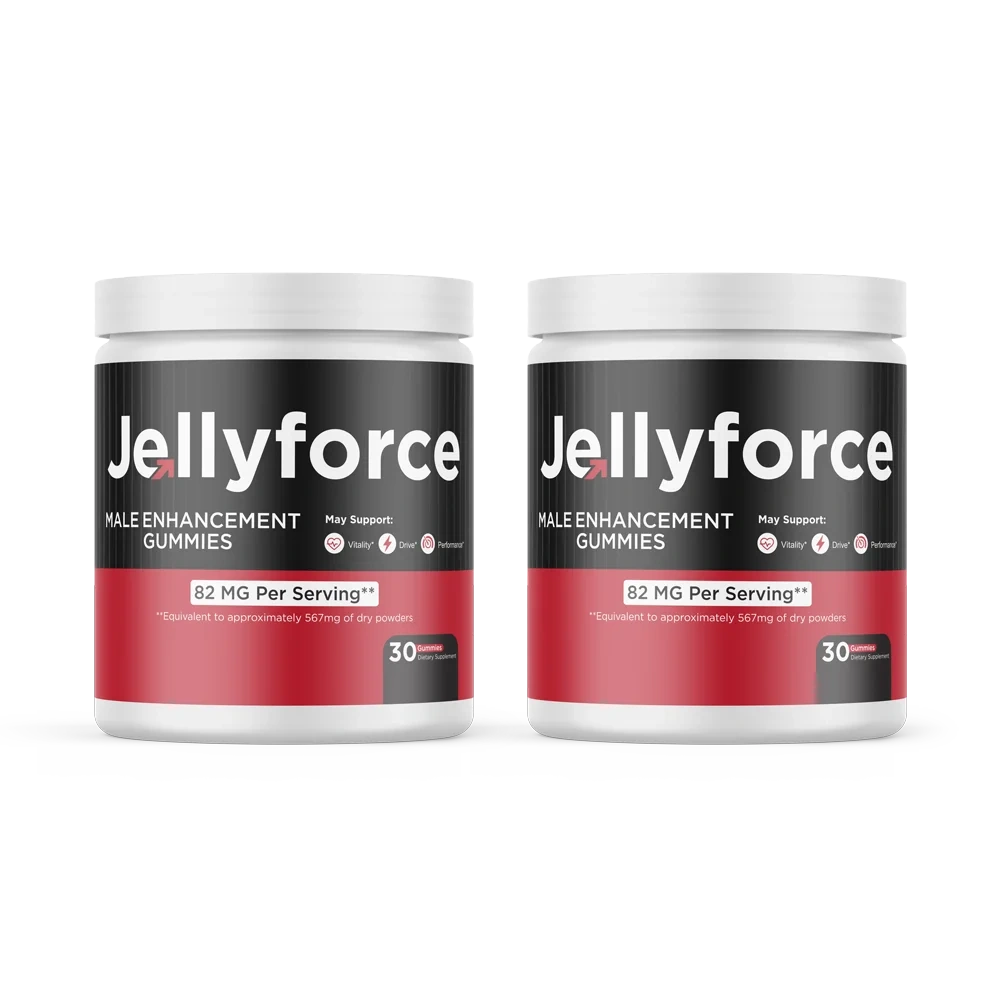
Order Jelly Force with the nine names in front of you
Nine named ingredients in an 82 mg blend, 5 mg of caffeine, one chewable once daily. 60 days from purchase to decide.
Two bottles $158 · six bottles $294 · 60-day money-back guarantee
Order Jelly Force From This CounterLot JEL-26/JE-6975 · one a day, 30 to a bottle · ships from the United States