Jelly Force Official Website › Articles › The formula
The formulaMaca, testosterone and what the trial actually measured
The trial this whole aisle rests on measured testosterone and found no difference from placebo.
It improved self-rated sexual desire from week eight at 1,500 mg and 3,000 mg a day, and its authors put the absent hormone relationship in the paper's title. Ashwagandha is the ingredient here that does move testosterone, at amounts a small serving cannot deliver.
The trial almost everybody quotes
Maca is on this bottle and on most bottles in this aisle, and the reason is a single paper from 2002.
It was a twelve-week randomised, double-blind, placebo-controlled trial in men aged 21 to 56, comparing 1,500 mg a day of gelatinised maca, 3,000 mg a day, and placebo. Self-reported sexual desire was measured at weeks 4, 8 and 12, alongside Hamilton scales for depression and anxiety and serum testosterone and oestradiol.
Desire improved in the maca arms from week eight. That is the finding the whole category is built on and it is a real finding in a properly designed trial.
Jelly Force is a dietary supplement and not a treatment. Nothing here is medical advice. Difficulty that is new, persistent or getting worse is a recognised early signal of vascular trouble and deserves an assessment rather than a purchase — a 2026 review in Nature Reviews Urology sets out why, and the NIDDK patient guide sets out what an assessment involves.
What else the same trial measured
This is the part that almost never travels with the headline, and it is in the title of the paper.
The authors measured serum testosterone and oestradiol in every arm. Neither differed between the maca groups and placebo. A logistic regression then showed the effect on desire was independent of the Hamilton scores as well — so not mood, and not hormones.
The paper is called Effect of Lepidium meyenii (MACA) on sexual desire and its absent relationship with serum testosterone levels in adult healthy men. The absence is in the title because the authors thought it was important, and twenty-four years of marketing has quietly dropped it.
| What the 2002 trial measured | What it found |
|---|---|
| Self-rated sexual desire | Improved in both maca arms from week 8 |
| Serum testosterone | No difference from placebo |
| Serum oestradiol | No difference from placebo |
| Hamilton depression score | Did not explain the effect on desire |
| Hamilton anxiety score | Did not explain the effect on desire |
Five outcomes, one positive, and the two hormone rows are the ones that get left out of the summary.
Why the distinction matters to a buyer
Because it changes what you should expect and what you should check.
If a botanical worked by raising testosterone, a blood test would tell you whether it had done anything, and a man with genuinely low testosterone would be the obvious customer. Neither is true here. The one measurable thing the trial looked for was absent, and the reported effect was subjective.
It also means a page claiming this ingredient boosts testosterone is contradicted by the single best trial of it. That is not a small distinction on a shelf where the word appears on half the packaging.
- What the evidence supports: maca, at 1.5 to 3 g a day for eight weeks or more, improved self-rated desire against placebo in one randomised trial.
- What it does not support: that maca raises testosterone. The same trial measured it and found nothing.
- What a second trial adds: a dose-finding study found the 3.0 g arm improved on both questionnaires and the 1.5 g arm did not, which points at a dose-response.
- What a third strand adds: a 2024 meta-analysis of maca and physical performance found large effects across animal and human work, again with more effect at higher amounts.
Where ashwagandha does move a hormone, and how much
One ingredient on this bottle does move testosterone in trials, and it is ashwagandha. Tribulus, the herb most often sold on a testosterone promise, is on the panel too, and its 2026 meta-analysis found testosterone no different from placebo.
A 2026 meta-analysis of 23 randomised placebo-controlled trials in 1,706 people found ashwagandha raised testosterone in men by about 57 ng/dl, and not in women. It also lowered cortisol, raised serotonin, raised T4 modestly and left TSH, T3 and oestradiol unchanged.
The trial in overweight men aged 40 to 70 found the same direction — DHEA-S up 18% more than placebo, testosterone up 14.7% more — and, in the same paper, no statistically significant difference between groups in fatigue, vigour or sexual well-being over eight weeks.
So the hormone moved and the men did not report feeling different. Both halves are in the abstract and an honest page prints both.
Order Jelly Force with the trials in front of you
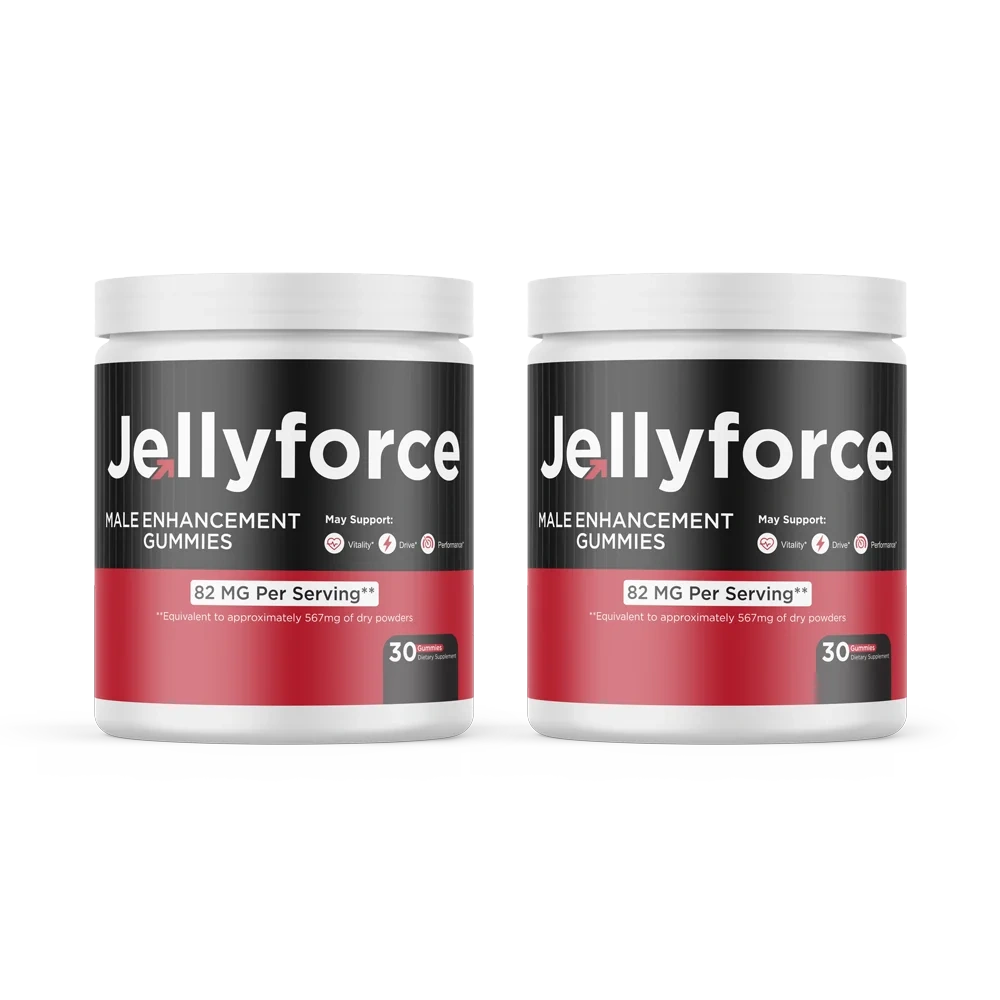
Nine named ingredients on a printed Supplement Facts panel, and a page that tells you which claims the research actually supports and which it does not.
Two bottles $158 · six bottles $294 · 60-day money-back guarantee
Order Jelly Force From This CounterLot JEL-26/JE-6975 · one a day, 30 to a bottle · ships from the United States
How the testosterone story got attached to maca anyway
Nobody invented it out of nothing. Three ordinary things happened and the result was a claim the evidence does not carry.
The outcome was about sex, and sex gets read as testosterone. A trial reporting improved desire in men is easy to summarise, in one careless step, as a trial about male hormones. The step is careless and it is small.
Maca is sold beside things that do move hormones. Ashwagandha is on the same shelves and in the same formulas, and its effect on testosterone is real and pooled across twenty-three trials. A claim true of one ingredient drifts onto the one next to it. Tribulus shows the same drift from the other side: a 2016 review found its androgen reputation did not survive the evidence, and it is still sold on it.
Nobody is required to cite anything. A structure-and-function statement on a package is not a claim that has to be defended with a trial, and the FTC's guidance on health claims describes a standard that most of this aisle has never been tested against.
The correction is not that maca does nothing. It is that maca has one randomised finding, about a subjective outcome, at amounts in grams, with the hormone measured and absent. That is a more interesting result than the version the marketing tells, and it is checkable in about twenty seconds.
What to ask of any botanical that claims a hormone
Four questions, and they work on any label in this aisle.
- Was the hormone measured, or inferred? A trial that measured testosterone and reported it is worth far more than one that measured a questionnaire and left the hormone to the reader's imagination.
- In whom? The ashwagandha trial closest to this product ran in overweight men aged 40 to 70 with mild fatigue. A result in that group says little about a healthy 28-year-old, and vice versa.
- At what amount? This is where almost every label in the aisle parts company with its own citations.
- Did anything the person noticed change? The most uncomfortable finding in this whole area is that hormones can move in a trial while the self-reported outcomes do not. That happened in the ashwagandha trial above, and its authors say so in the abstract.
Run those four against any product in this category and most of the claims thin out considerably. Run them against this bottle and the answer is the one on the dosage section: real ingredients, real trials, a serving far below what those trials used, and no claim on this website that the gummy inherits their results.
And the amount question, which applies to both
Every finding above came from an amount far larger than anything in an 82 mg blend. Maca's trials worked in grams. Ashwagandha's used a standardised extract delivering 21 mg of withanolide glycosides a day, which is typically a few hundred milligrams of extract.
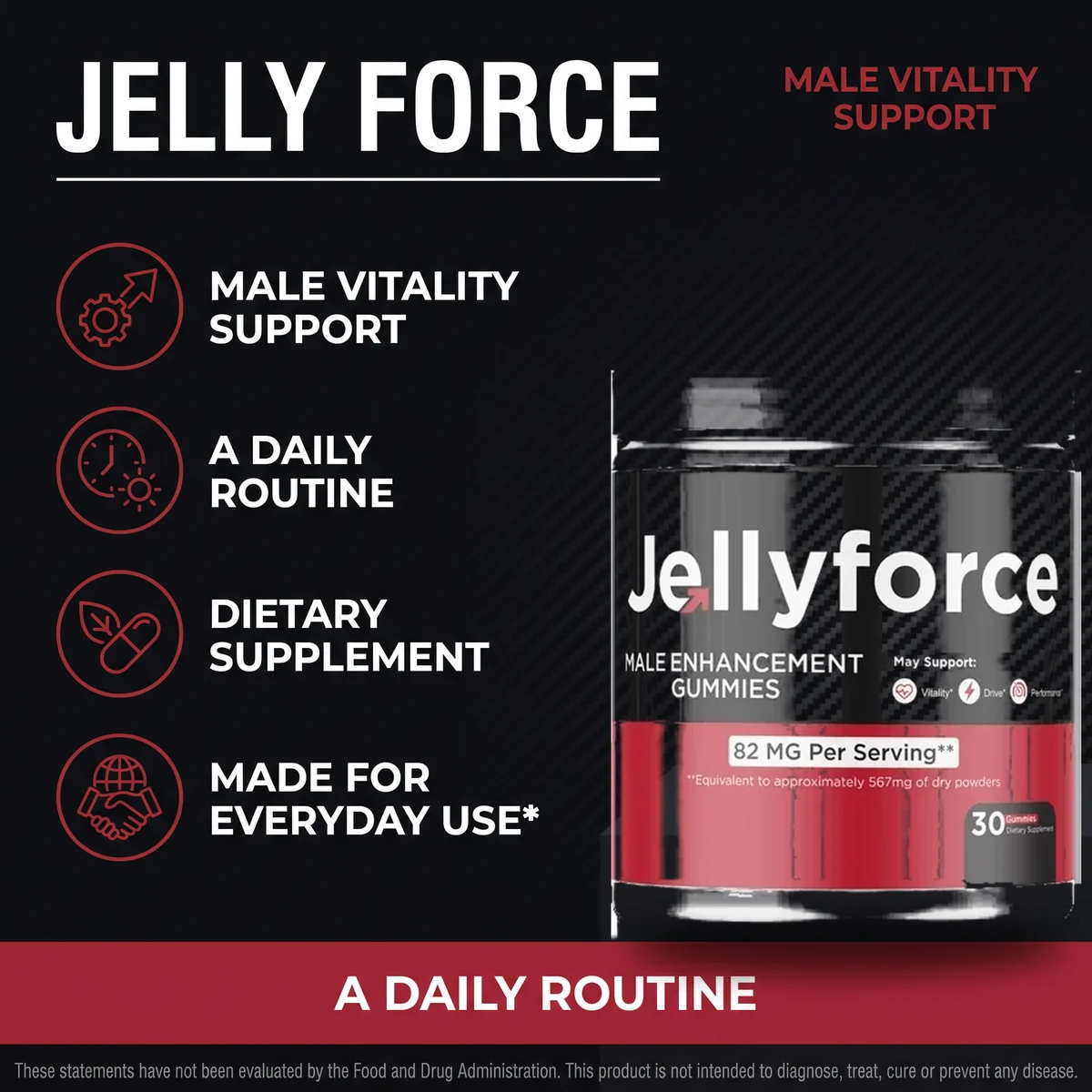
The panel prints an 82 mg proprietary blend for all nine ingredients together, equivalent to roughly 567 mg of dry powders, with caffeine at 5 mg the only amount given alone. Ashwagandha is listed after caffeine, so by the blend order it is 5 mg or less. Even the most generous possible reading for maca — set out in full on the ingredients page — leaves it below the smaller trial arm.
None of which makes the ingredient a fiction. It makes this a small daily dose of a well-studied plant, which is a fair description and a different one from what the category's advertising tends to suggest.
There is one more thing the 2002 trial did that is worth borrowing. It measured three things it could have left out — testosterone, oestradiol and two Hamilton scales — and reported all of them, including the two that came back flat and the two that failed to explain the result. A trial that only reports what worked is a trial a reader cannot weigh, and the same is true of a product page.
That is the standard this article is trying to meet. Maca has one good randomised finding and one clear absence, and both belong in the same paragraph. So does the gap between what the trial used and what a share of 82 mg can be.
The best trial of maca found an effect on self-rated desire and explicitly no effect on testosterone. Ashwagandha does raise testosterone in men across 23 trials, at amounts the 5 mg or less on this panel cannot deliver, and the tribulus trials found no testosterone change at all. The trial closest to this product's buyer found the hormonal change without a reported change in how the men felt. Both are worth knowing before reading any advertising in this aisle.
- Gonzales GF, Córdova A, Vega K, et al. Effect of Lepidium meyenii (MACA) on sexual desire and its absent relationship with serum testosterone levels in adult healthy men. Andrologia. 2002;34(6):367-72. PMID 12472620. https://pubmed.ncbi.nlm.nih.gov/12472620/
- Dording CM, Fisher L, Papakostas G, et al. A double-blind, randomized, pilot dose-finding study of maca root (L. meyenii) for the management of SSRI-induced sexual dysfunction. CNS Neurosci Ther. 2008;14(3):182-91. PMID 18801111. https://pubmed.ncbi.nlm.nih.gov/18801111/
- Huerta Ojeda Á, Rodríguez Rojas J, Cancino-López J, et al. Effects of Maca (Lepidium meyenii Walp.) on Physical Performance in Animals and Humans: A Systematic Review and Meta-Analysis. Nutrients. 2024;17(1):107. PMID 39796542. https://pubmed.ncbi.nlm.nih.gov/39796542/
- Fornalik M, Malkiewicz A, Adamczak D, Nawrocki F, Zielinska A, Mondal SA. Hormonal Modulation with Withania somnifera: Systematic Review and Meta-Analysis of Randomized-controlled Trials. Planta Med. 2026;92(8):790-805. PMID 41740946. https://pubmed.ncbi.nlm.nih.gov/41740946/
- Lopresti AL, Drummond PD, Smith SJ. A Randomized, Double-Blind, Placebo-Controlled, Crossover Study Examining the Hormonal and Vitality Effects of Ashwagandha (Withania somnifera) in Aging, Overweight Males. Am J Mens Health. 2019;13(2):1557988319835985. PMID 30854916. https://pubmed.ncbi.nlm.nih.gov/30854916/
- Suharyani S, Amanda B, Angellee J, William W, Hariyanto TI, I’tishom R. Tribulus terrestris for management of patients with erectile dysfunction: a systematic review and meta-analysis of randomized trials. Int J Impot Res. 2026;38(1):11-18. PMID 40360723. https://pubmed.ncbi.nlm.nih.gov/40360723/
- Neychev V, Mitev V. Pro-sexual and androgen enhancing effects of Tribulus terrestris L.: Fact or Fiction. J Ethnopharmacol. 2016;179:345-55. PMID 26727646. https://pubmed.ncbi.nlm.nih.gov/26727646/
- Durukan E, Jensen CFS, Grundtvig Skaarup K, Fode M. Erectile dysfunction and cardiovascular health. Nat Rev Urol. 2026. PMID 42649386. https://pubmed.ncbi.nlm.nih.gov/42649386/
- Erectile Dysfunction (ED). National Institute of Diabetes and Digestive and Kidney Diseases, National Institutes of Health. https://www.niddk.nih.gov/health-information/urologic-diseases/erectile-dysfunction