Jelly Force Official Website › Articles › Reading the research
Reading the researchThe caffeine and green tea pairing in Jelly Force: what those trials actually measured
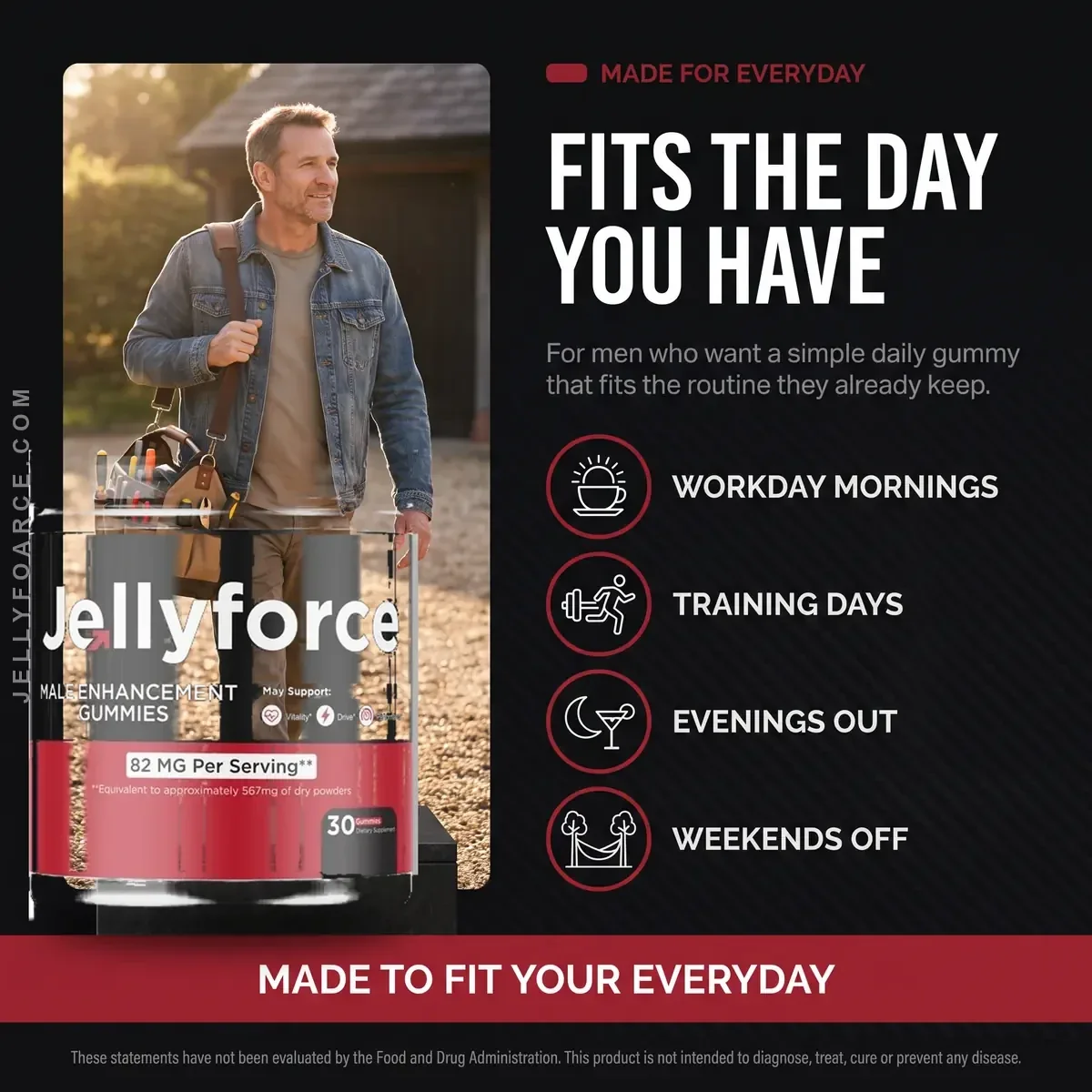
Jelly Force pairs 5 mg of caffeine with green tea extract, a combination borrowed from a large body of nutrition research — but that research used 100 mg to 150 mg of caffeine per dose, twenty to thirty times what one gummy carries, and it measured fat oxidation, energy expenditure, cognition and mood.
None of the published trials behind this pairing measured sexual function, libido or the kind of “vitality” the advertising sells. This article sets out exactly what those trials did test, at what doses, and what that leaves open for a 5 mg gummy.
The pairing on the panel
The Supplement Facts panel lists nine ingredients inside one 82 mg proprietary blend, printed in descending order by weight: muira puama extract, maca extract, catuaba extract, green tea extract, caffeine at 5 mg, then ashwagandha, L-arginine, tribulus terrestris and horny goat weed extract. Because the federal labelling rule for proprietary blends requires ingredients inside the blend to be listed in descending order of weight, green tea extract’s position — immediately ahead of caffeine — sets its floor: it is at least 5 mg, and it shares, together with muira puama and catuaba, the roughly 57 mg to 77 mg the label’s order allows the four names ahead of caffeine. Caffeine itself is the one ingredient on this panel with an amount stated outright: 5 mg, once a day, in one gummy.
Jelly Force is a dietary supplement and not a treatment. Nothing here is medical advice. New, persistent or worsening sexual difficulty is a recognised early signal of vascular disease and deserves an assessment rather than a purchase — a 2026 review in Nature Reviews Urology sets out why.
Why caffeine and green tea are studied together at all
Caffeine and green tea catechins turn up together in nutrition research for a specific reason that has nothing to do with sexual health: both act on the body’s handling of energy, and researchers have long wanted to know whether combining them changes anything beyond what caffeine does alone. A 2009 trial in the British Journal of Nutrition states the question directly in its own introduction: “it is unclear if acute effects are caused by specific catechins, caffeine or their combination.”1 That is the research tradition Jelly Force’s pairing sits inside — a metabolism question, tested in people who were not selected for, or assessed on, anything related to sexual response.
The fat-oxidation and energy trials, and the doses they used
Three studies illustrate the pattern clearly.
| Study | Caffeine dose used | What was measured | Who was studied |
|---|---|---|---|
| Gregersen et al, 20091 | 150 mg, alone or with 600 mg of a catechin mixture enriched in EGCG | Energy expenditure and respiratory quotient (fat oxidation) over 13.5 hours in a metabolic chamber | 15 healthy, normal-weight men |
| Zhang et al, 20202 | 100 mg per dose, twice daily (200 mg/day) for 14 days, alone or with oolong tea | 24-hour energy expenditure, fat oxidation and sleep architecture by polysomnography | 12 non-obese men |
| Camfield et al, 2014, meta-analysis3 | Pooled across included trials of caffeine, L-theanine and EGCG, typically tens to a couple hundred milligrams per dose | Cognitive function and mood | Healthy adults, pooled across studies |
The Gregersen trial found that caffeine plus the EGCG-enriched catechin mixture nudged energy expenditure and fat oxidation upward compared with caffeine alone, though the difference did not reach statistical significance; the authors’ own conclusion was that “catechin/caffeine combinations at these dosages and mode of application had non-significant acute effects.” The Zhang trial, using oolong tea rather than green tea specifically, found caffeine and caffeine-plus-tea both raised fat oxidation by roughly 20% without disturbing sleep — a genuinely useful finding, for the question it asked, which was about fat metabolism and sleep, not energy or drive in the way the word “vitality” is used on a supplement label.
The cognition and mood research, and the doses it used
A separate strand of research pairs caffeine with green tea’s other well-studied constituents, L-theanine and EGCG, to ask about attention and mood rather than metabolism. The 2014 meta-analysis in Nutrition Reviews pooled trials of these “tea constituents” and reported acute effects on cognitive function and mood.3 A 2017 systematic review in Phytomedicine covered the same ground for green tea specifically, surveying its effects on cognition, mood and brain function across the published human literature.4 Both bodies of work test caffeine amounts well above 5 mg, usually tens to low hundreds of milligrams per dose, and both measure attention, reaction time, calmness or mood — useful outcomes in their own right, and not sexual ones.
Scaling those doses down to 5 mg
Here is the arithmetic a reader can do from the numbers above. The lowest single caffeine dose in the trials cited here is 100 mg. Jelly Force’s printed amount is 5 mg, twenty times smaller. The Gregersen trial’s 150 mg dose is thirty times the amount in one gummy, and the Zhang trial’s 200 mg daily total, split across two 100 mg doses, is forty times as much caffeine across a day as one gummy provides.
- What that does not mean. A smaller dose is not automatically an ineffective one; caffeine sensitivity varies, and 5 mg is not zero.
- What it does mean. None of the trials above tested anything close to 5 mg, so none of them can be read as evidence for what 5 mg does, in either direction.
- What is unverifiable from this label. Whether the catechin content behind green tea extract on this panel approaches the 600 mg used in the Gregersen trial, because, like every other name in this blend besides caffeine, its exact milligram amount is not printed.
What a stimulant pairing can and cannot tell you about vitality
It is worth being precise about what the word “vitality” is doing on a label like this one. Caffeine reliably increases alertness and can measurably raise energy expenditure at typical trial doses; that much is well established, including in the trials above. What none of those trials measured is sexual desire, arousal or performance. A stimulant that makes someone feel more awake is not, by that fact alone, doing anything to the physiology a vitality supplement is sold to support, and no citation in this article should be read as implying otherwise.
The two research traditions — metabolism and cognition — are also the two places where the caffeine-catechin pairing has actually been tested in people. There is no third body of trials testing this pairing for sexual response, which means the pairing’s inclusion on a vitality label borrows credibility from research that answered a different question.
There is a reason a stimulant pairing sits on a vitality label at all, and it is worth naming rather than skipping past: erectile function is a vascular event before it is anything else, and a 2026 review in Nature Reviews Urology lays out how closely erectile dysfunction and cardiovascular health track together, down to shared risk factors and shared underlying blood-vessel biology.6 That review is about the cardiovascular system broadly, not about caffeine or green tea specifically, and it does not test this pairing at any dose. What it does establish is the mechanism a caffeine-catechin claim on a vitality label is implicitly leaning on — blood flow — even though none of the trials measuring this exact pairing, at any dose from 100 mg to 5 mg, looked at that mechanism at all.
Caffeine amounts in everyday context
| Source | Typical caffeine content |
|---|---|
| One Jelly Force gummy | 5 mg, printed on the panel |
| An 8-ounce cup of tea | 14 to 60 mg |
| An 8-ounce cup of coffee | 95 to 200 mg |
| Single dose used in the fat-oxidation trials above | 100 to 150 mg |
Tea and coffee ranges from MedlinePlus, the U.S. National Library of Medicine’s consumer health service.5
Set beside a cup of tea, 5 mg is a small fraction even of the low end of that range. Set beside the trial doses, it is further still. Neither comparison is a judgement on whether 5 mg belongs on this label; it is simply the honest scale of the number.
How to read a “researched ingredient” claim
- Find the trial the claim is leaning on, not just the ingredient name. A search on PubMed for the ingredient plus the outcome claimed (“caffeine AND libido,” for instance) is more informative than a search for the ingredient alone.
- Check the dose the trial used and compare it with the amount on the label you are holding, not with the ingredient’s reputation.
- Check the outcome the trial actually measured. “Energy expenditure” and “vitality” are not the same word, even where a label uses them near each other.
- Where a blend hides the exact amount, as green tea extract’s is hidden here, treat the printed order as a bound rather than a number, and say so plainly rather than guessing a figure.
Caffeine and green tea extract are a real, well-studied pairing — in nutrition research on fat oxidation, energy expenditure, cognition and mood, at doses of 100 mg to 150 mg of caffeine per sitting. Jelly Force prints 5 mg. That is a real ingredient at a small, disclosed amount, tested in a different context than the one it is sold for, and the gap between the trial doses and the label is worth knowing before comparing this gummy with a cup of green tea or a coffee.
Order Jelly Force with the research read first
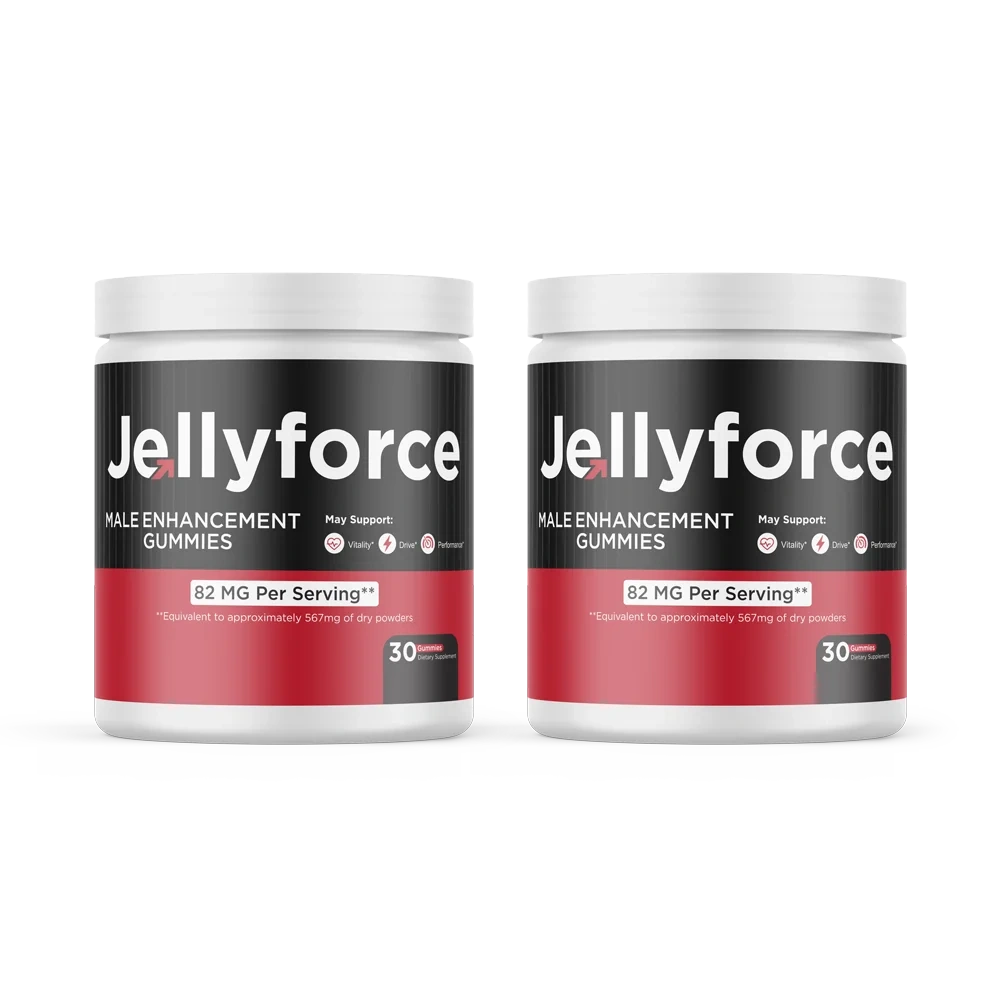
Nine named ingredients on the panel, one printed amount, and a clear account of what the caffeine-and-catechin trials actually tested.
Two bottles $158 · six bottles $294 · 60-day money-back guarantee
Order Jelly ForceOne a day, 30 to a bottle · ships from the United States
Related reading on this label
Two companion pieces work through the same kind of comparison for other parts of the panel: what the 82 mg total and its printed order let a reader work out, and what the evidence shows for two ingredients with no human trial at all.
- Gregersen NT, Bitz C, Krog-Mikkelsen I, Hels O, Kovacs EM, Rycroft JA, Frandsen E, Mela DJ, Astrup A. Effect of moderate intakes of different tea catechins and caffeine on acute measures of energy metabolism under sedentary conditions. Br J Nutr. 2009;102(8):1187-1194. PMID 19445822. https://pubmed.ncbi.nlm.nih.gov/19445822/
- Zhang S, Takano J, Murayama N, et al. Subacute Ingestion of Caffeine and Oolong Tea Increases Fat Oxidation without Affecting Energy Expenditure and Sleep Architecture: A Randomized, Placebo-Controlled, Double-Blinded Cross-Over Trial. Nutrients. 2020;12(12):3671. PMID 33260552. https://pubmed.ncbi.nlm.nih.gov/33260552/
- Camfield DA, Stough C, Farrimond J, Scholey AB. Acute effects of tea constituents L-theanine, caffeine, and epigallocatechin gallate on cognitive function and mood: a systematic review and meta-analysis. Nutr Rev. 2014;72(8):507-522. PMID 24946991. https://pubmed.ncbi.nlm.nih.gov/24946991/
- Mancini E, Beglinger C, Drewe J, Zanchi D, Lang UE, Borgwardt S. Green tea effects on cognition, mood and human brain function: A systematic review. Phytomedicine. 2017;34:26-37. PMID 28899506. https://pubmed.ncbi.nlm.nih.gov/28899506/
- Caffeine. MedlinePlus, U.S. National Library of Medicine. https://medlineplus.gov/caffeine.html
- Durukan E, Jensen CFS, Grundtvig Skaarup K, Fode M. Erectile dysfunction and cardiovascular health. Nat Rev Urol. 2026. PMID 42649386. https://pubmed.ncbi.nlm.nih.gov/42649386/
- 21 CFR 101.36, Nutrition labeling of dietary supplements, paragraph (c). Code of Federal Regulations, as published by the Legal Information Institute, Cornell Law School. https://www.law.cornell.edu/cfr/text/21/101.36