Jelly Force Official Website › Articles › Ingredients without trials
Ingredients without trialsMuira puama and catuaba: what the evidence shows when neither has a human trial
Muira puama and catuaba, two of the five ingredients named in Jelly Force’s advertising, have never been tested on people in a randomised clinical trial for any use.
What exists instead is chemistry and laboratory pharmacology: analyses of what compounds the bark contains, and cell- or animal-based work on what those compounds do. That is a real evidence base. It is not the same evidence base as a human dose-response trial, and the difference matters to anyone comparing this bottle against a published study.
Two Brazilian barks, two supply chains
Muira puama is the trade name for Ptychopetalum olacoides, a small tree native to the Amazon basin, and its root and stem wood have a long history in Brazilian folk medicine as a tonic. Catuaba is a looser name: several unrelated Brazilian barks are sold under it depending on the region and the supplier, most often Trichilia catigua, though Erythroxylum catuaba and species of Anemopaegma also circulate under the same label. This article does not try to identify which species is behind the word “catuaba” on any particular bottle; what follows applies to the plant material most commonly analysed under that name, Trichilia catigua, and the point stands regardless of which catuaba source a given product actually uses.
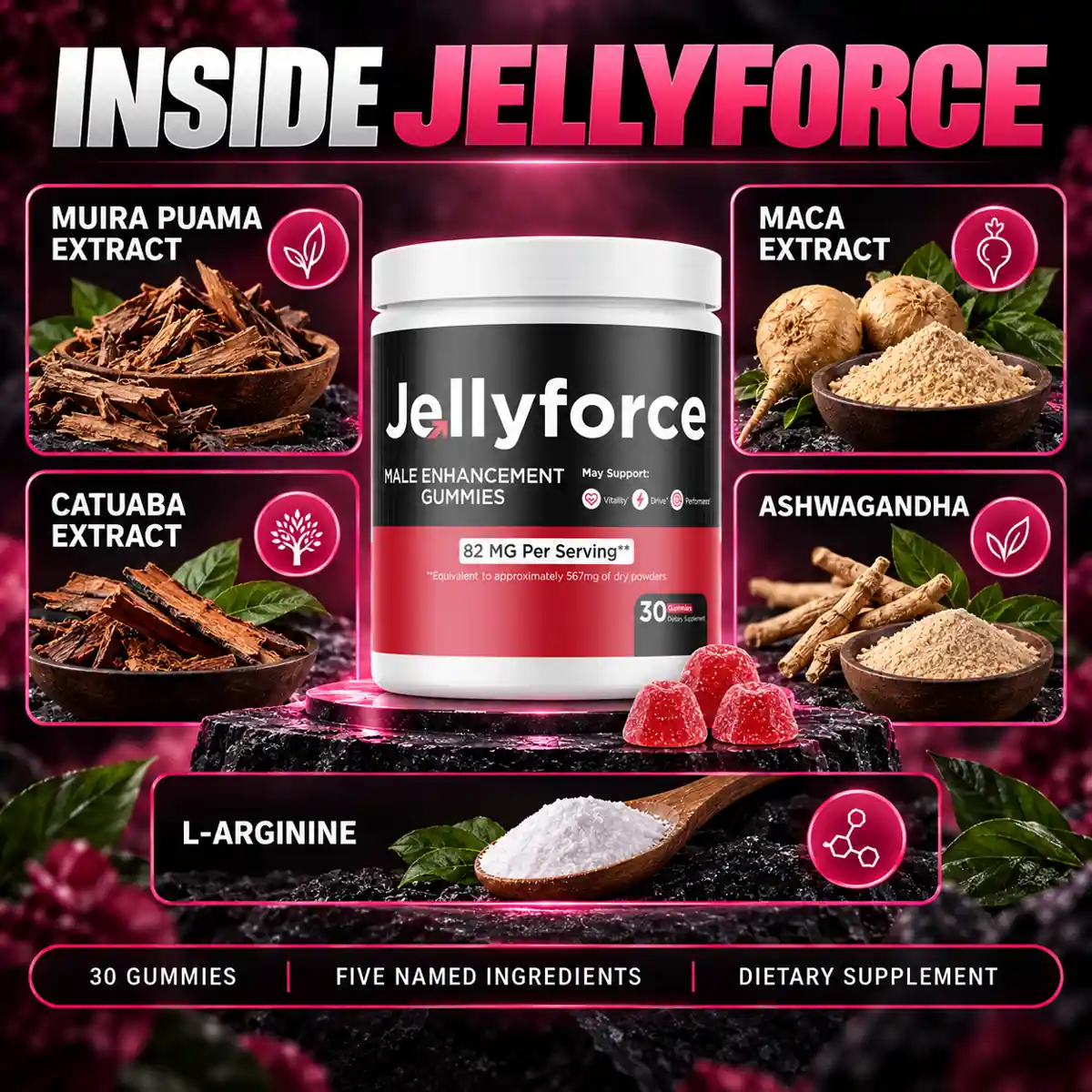
Both names appear in the ingredient graphic on Jelly Force’s own sales page, alongside maca, ashwagandha and L-arginine, as two of the five ingredients the advertising highlights. Both also appear on the Supplement Facts panel, inside the 82 mg proprietary blend, without an amount of their own.
Jelly Force is a dietary supplement and not a treatment. Nothing here is medical advice. New, persistent or worsening sexual difficulty is a recognised early signal of vascular disease and is worth an assessment rather than a purchase — a 2026 review in Nature Reviews Urology sets out why, and the NIDDK patient guide sets out what an assessment involves.
What “no human trial” actually means
It does not mean unsafe. It does not mean inactive. It does not mean the centuries of traditional use are invented. It means something narrower and more specific: nobody has taken a group of people, given some of them muira puama or catuaba alone and some of them a placebo, and measured an outcome under blinded, randomised conditions. That is the study design that lets a reader attach a number — an effect size, a response rate, a dose that worked — to a claim about a person rather than about a cell culture or a rat.
A search of PubMed’s indexed literature for either plant, run broadly and without restricting to a particular outcome, turns up the same pattern for both: chemical characterisation, antioxidant and antimicrobial screening, and a scattering of animal and in-vitro pharmacology. No randomised human trial of either plant alone, for any indication, is indexed.
What has been measured: muira puama
The most direct chemical work on muira puama bark is a 2018 analysis in Natural Product Research, which characterised what the extract actually contains.1 It found two alkaloids making up roughly three-quarters of what could be measured in the extract, with a phenolic fraction no higher than about 1 mg per gram of material. That is useful information for anyone standardising an extract, and it is chemistry, not a clinical result: nobody in that study took the extract, and nothing about sexual response, energy or any other outcome in a living person was recorded.
A 2020 review in Pharmaceuticals surveyed fifteen herbal “sexual enhancers,” muira puama among them, specifically for psychiatric and neurological adverse effects.2 Its conclusion, in the authors’ own words, was that most of the plants reviewed “appeared to be safe at therapeutic doses,” but that “few data are available on the side effects of several plants included in this review, and more clinical studies with controlled administrations should be conducted.” Muira puama is one of the plants the review flags as under-studied even for safety, let alone for the effect it is sold to produce.
| Type of evidence | Exists for muira puama? | What it can tell a reader |
|---|---|---|
| Chemical/extract analysis | Yes1 | What compounds are in the extract and in roughly what proportion |
| In-vitro or animal pharmacology | Some, scattered across small studies | Plausible mechanisms, none confirmed in people |
| Adverse-effect review across human case reports | Yes, as part of a wider review2 | No major red flag identified, but the reviewers note the data are thin |
| Randomised human trial, muira puama alone | None indexed | No dose-response, no effect size, no placebo comparison exists to cite |
What has been measured: catuaba
The catuaba literature runs in a similar direction, and lately it has run toward questions that have nothing to do with sexual health at all. A 2018 study in the Journal of Ethnopharmacology tested an aqueous extract of Trichilia catigua bark against a panel of central-nervous-system receptor targets in vitro, reporting activity at several of them.3 That is a screening study: it shows the extract can bind or modulate certain receptors in a dish, which is the kind of early-stage result that generates a hypothesis about what a plant might do in a person, not evidence that it does it.
More recent work on the same bark has gone further afield still. A 2024 paper in Fitoterapia tested Trichilia catigua extract against Helicobacter pylori, the stomach bacterium, in vitro and by molecular docking.4 A 2025 paper in Future Microbiology tested it against clinically relevant Candida species.5 And a 2026 paper in the Brazilian Journal of Biology examined the bark’s immunomodulatory, antibacterial and antineoplastic potential, isolating a specific compound, cinchonain Ib, for closer study.6 All three are legitimate, recent, peer-reviewed science. None of them measured a sexual, vitality or energy outcome in a person, and none of them is a human trial of any kind — they are laboratory work on infection, cancer cells and immune markers.
Put together, the catuaba research active right now is being driven by interest in antimicrobial and anticancer activity, not by anyone running a placebo-controlled trial on the traditional aphrodisiac use the name is sold under.
The one study that comes closest
The nearest thing to a human study involving muira puama is a 2026 paper in Phytotherapy Research on a five-ingredient formulation called Oxyfil, which combines extracts of fireweed, muira puama, ginkgo and horsetail with the amino acid citrulline.7 It is worth reading closely, because it illustrates exactly the gap this article is about.
The preclinical half of the study tested the formulation on isolated mouse prostate tissue challenged with a bacterial inflammatory trigger, and measured several inflammation and oxidative-stress markers. The clinical half was a retrospective, non-randomised study of fifty-nine men aged 50 to 75 with moderate-to-severe urinary symptoms from benign prostatic hyperplasia and mild erectile dysfunction, comparing the formulation alone or alongside standard BPH medicines. The outcomes measured were urinary flow rate and symptom scores for an enlarged prostate, not a sexual-performance or vitality measure, and treatment was assigned by the treating physician rather than at random.
- Population. Men aged 50–75 with diagnosed prostate disease, not a general population of adults wanting more energy.
- Ingredient. Muira puama was one of five actives plus citrulline, never isolated or tested alone.
- Design. Retrospective and non-randomised on the clinical side, which is weaker evidence than a randomised trial even before the other limits are counted.
- Outcome. Urinary flow and prostate-symptom scores, not a sexual-response or vitality measure.
That is four separate reasons this study cannot be read as evidence that muira puama, at any amount, does anything for the use Jelly Force is sold for. It is nonetheless the most clinical the muira puama literature gets, which says something about how thin the rest of the record is.
Why traditional use is not the same claim as clinical evidence
Traditional use is real information. A plant that generations of a culture reached for, prepared a particular way, for a particular purpose, is a reasonable starting point for a scientist deciding what to test next — and both of these barks earned their reputation that way, long before either had a chemistry paper written about it. But traditional use answers a different question than a clinical trial does. It can tell you a plant was used, by whom, and roughly how; it cannot tell you what dose produces what effect size in what proportion of people, because nobody was counting, randomising or comparing against a placebo. The NIH’s own guidance on using dietary supplements wisely makes exactly this distinction: a long history of use is a reason to take an ingredient seriously enough to study, not a substitute for having studied it.
What the amounts on this bottle add to the picture
Even setting the trial question aside, Jelly Force’s own label bounds what these two ingredients can weigh. The panel lists nine names inside one 82 mg proprietary blend, in descending order by weight, with caffeine printed fifth at 5 mg. Muira puama is listed first, the largest single share, at up to roughly 62 mg if every other ingredient sat at its allowed minimum. Catuaba, listed third, is bounded at roughly 24 mg by the same logic. The full arithmetic behind those figures is set out in a companion article on this blog.
Here is the honest complication: even if a human trial of muira puama or catuaba existed tomorrow and found a dose that worked, this label still could not tell a reader whether 24 mg to 62 mg of extract met that dose, because no such trial exists to compare against. The ceiling the label sets is real. What that ceiling should be compared with is, for these two ingredients, an open question rather than a published number.
How to read an ingredient with no trial behind it
- Search the plant’s scientific name on PubMed, not the common name alone — common names cover multiple species, as catuaba does.
- Check whether any result is a randomised trial in people, not a review, an animal study or an in-vitro screen. The publication type field in a PubMed record states this directly.
- If the closest result is a combination product, note every ingredient in it and the population it was tested on. A result for five ingredients in older men with a prostate diagnosis is not a result for one ingredient in a general adult population.
- Treat traditional-use claims as a reason the ingredient is worth studying, not as a substitute for the study.
- Where an adverse-effect review exists, read its own stated limits. A review that says the evidence is thin is still useful — it is telling you what is known about safety, which is a narrower and more answerable question than what is known about effect.
Muira puama and catuaba are two of the five ingredients Jelly Force advertises by name, and neither has a published randomised human trial behind it, alone or for this use. What exists is chemistry, in-vitro screening, a scattering of unrelated antimicrobial and anticancer work on catuaba, and one 2026 combination-product study in older men with prostate disease that included muira puama as one of five actives. That is a real but limited evidence base, and it does not support a specific effect size or dose for either plant in a healthy adult.
Order Jelly Force with the evidence read first
Nine named ingredients on the panel, five highlighted in the advertising, and a clear account of what has and has not been tested in people.
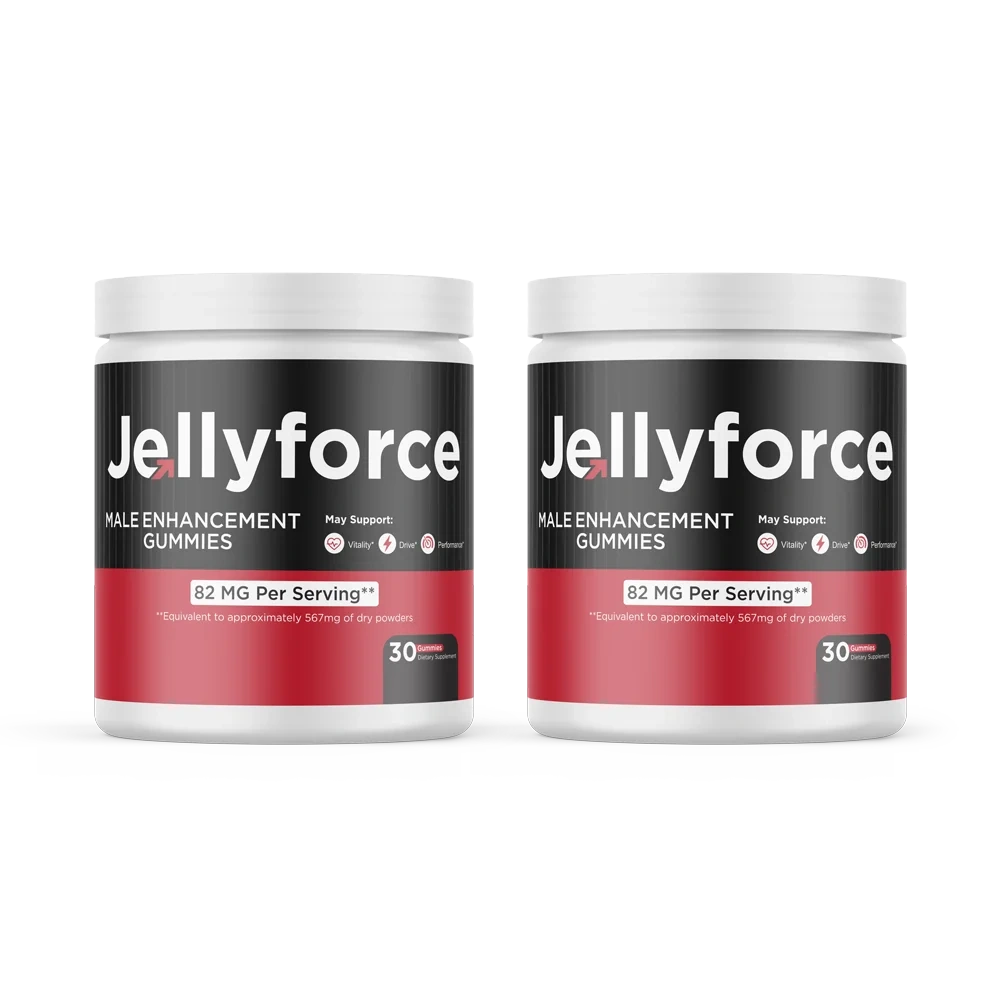
Two bottles $158 · six bottles $294 · 60-day money-back guarantee
Order Jelly ForceOne a day, 30 to a bottle · ships from the United States
Related reading on this label
Two companion pieces on this blog work through the same kind of question for other ingredients on the panel: what the 82 mg total and its printed order let a reader work out, and what the foundational maca trial actually measured, which by contrast is the one ingredient here with a randomised human trial behind it.
- Tian X, Guo S, He K, et al. Qualitative and quantitative analysis of chemical constituents of Ptychopetalum olacoides Benth. Nat Prod Res. 2018;32(3):354-357. PMID 28750557. https://pubmed.ncbi.nlm.nih.gov/28750557/
- Brunetti P, Lo Faro AF, Tini A, Busardò FP, Carlier J. Pharmacology of Herbal Sexual Enhancers: A Review of Psychiatric and Neurological Adverse Effects. Pharmaceuticals (Basel). 2020;13(10):309. PMID 33066617. https://pubmed.ncbi.nlm.nih.gov/33066617/
- Bernardo J, Ferreres F, Gil-Izquierdo Á, et al. In vitro multimodal-effect of Trichilia catigua A. Juss. (Meliaceae) bark aqueous extract in CNS targets. J Ethnopharmacol. 2018;211:247-255. PMID 28970152. https://pubmed.ncbi.nlm.nih.gov/28970152/
- Ritter MR, Oliveira MT, Ardisson JS, et al. Trichilia catigua against Helicobacter pylori: An in vitro, molecular and in silico approach. Fitoterapia. 2024;177:106101. PMID 38945495. https://pubmed.ncbi.nlm.nih.gov/38945495/
- Ritter MR, Faria DR, Rodrigues FAV, et al. Activity of extracts and isolated compounds Trichilia catigua against clinically relevant candida species. Future Microbiol. 2025;20(3):227-235. PMID 39711139. https://pubmed.ncbi.nlm.nih.gov/39711139/
- Cordeiro MF, Albuquerque APB, Beserra FG, et al. Immunomodulatory, antibacterial and antineoplastic potential of Trichilia catigua A. Juss. (Meliaceae) bark extracts and isolated compound cinchonain Ib. Braz J Biol. 2026;85:e296877. PMID 41538575. https://pubmed.ncbi.nlm.nih.gov/41538575/
- Chiavaroli A, Acquaviva A, Simone SCD, et al. Protective Effects Induced by a Novel Food Supplement Based on Epilobium angustifolium, Ptychopetalum olacoides, Ginkgo biloba, and Equisetum arvense Extracts and Citrulline in the Lower Urinary Tract: Preclinical and Clinical Evidence. Phytother Res. 2026 Sep 1. PMID 42680212. https://pubmed.ncbi.nlm.nih.gov/42680212/
- Durukan E, Jensen CFS, Grundtvig Skaarup K, Fode M. Erectile dysfunction and cardiovascular health. Nat Rev Urol. 2026. PMID 42649386. https://pubmed.ncbi.nlm.nih.gov/42649386/
- Erectile Dysfunction (ED). National Institute of Diabetes and Digestive and Kidney Diseases, National Institutes of Health. https://www.niddk.nih.gov/health-information/urologic-diseases/erectile-dysfunction
- Using Dietary Supplements Wisely. National Center for Complementary and Integrative Health, National Institutes of Health. https://www.nccih.nih.gov/health/using-dietary-supplements-wisely
- 21 CFR 101.36, Nutrition labeling of dietary supplements, paragraph (c). Code of Federal Regulations, as published by the Legal Information Institute, Cornell Law School. https://www.law.cornell.edu/cfr/text/21/101.36